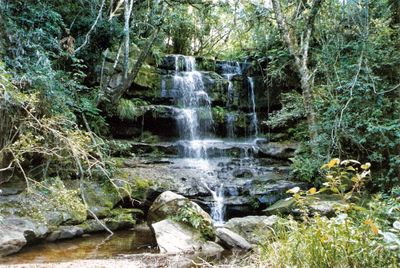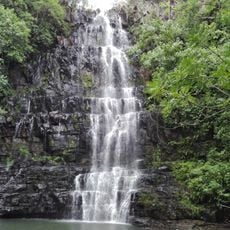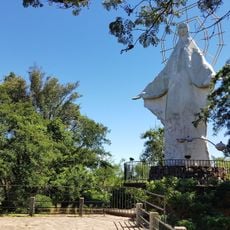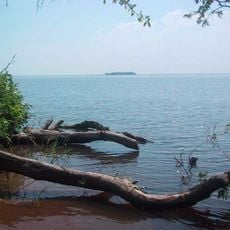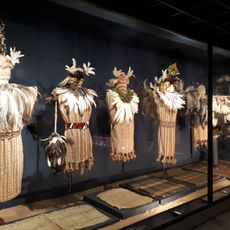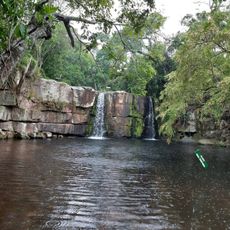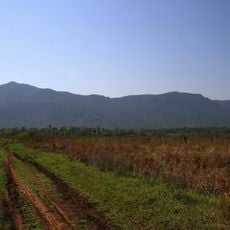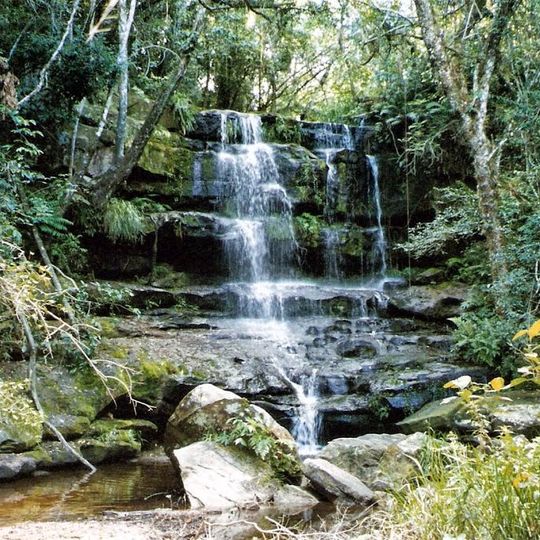
Salto Guaraní, Waterfall in Paraguarí, Paraguay.
A waterfall in Paraguarí province cascades over multiple tiers of black basalt rock formations, surrounded by subtropical vegetation. The water descends through several levels, forming successive natural pools between the rock ledges. Dense tree cover frames the cascade, while ferns and mosses grow on the moist rock surfaces. The volume of water varies according to the season and affects the flow rate across the formations.
During the pre-colonial era, various indigenous groups used the waterfall area as a geographic reference point for their territories. European cartographers first documented the site in the eighteenth century during the Spanish colonial period. In the twentieth century, the area was developed for local access, and basic paths were created leading to the rock formations. Conservation measures began in the nineteen nineties to protect the surrounding forest areas.
Local families use this site as a gathering point for community events. The Guaraní people consider the flowing water a spiritual element of their landscape and incorporate the location into their oral traditions. During the rainy season, residents from surrounding villages assemble to celebrate communal festivals and prepare traditional foods. The waterfall plays an important role in the cultural memory of the region.
Visitors reach the cascade via a marked trail from the main parking area, approximately 800 meters away. Wooden viewing platforms at different elevations provide vantage points for observing the falls. The best time to visit is from April through October when humidity levels are lower. Sturdy footwear is recommended for the trail. Local vendors offer refreshments near the entrance on weekends. No formal facilities exist at the site itself.
The varying mineral deposits in the basalt rock create color shifts in the water ranging from greenish to brownish, depending on rainfall patterns and sediment concentrations. Geologists have identified unusual hexagonal column structures in the basalt formed during volcanic cooling processes. The natural pools contain microscopic organisms not documented elsewhere in Paraguay. Some rock formations display pre-Columbian markings of unknown origin.
The community of curious travelers
AroundUs brings together thousands of curated places, local tips, and hidden gems, enriched daily by 92,008 contributors worldwide.