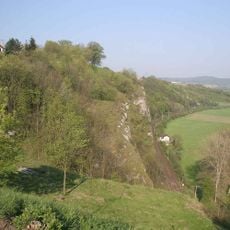
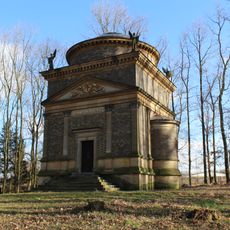
Český kras Protected Landscape Area, Protected limestone area in Central Bohemia, Czech Republic.
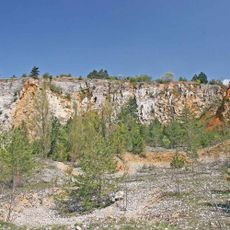
The Český kras Protected Landscape Area is a limestone region between Prague-Radotín and Beroun, declared in 1972 across 132 km². Its terrain of Silurian and Devonian limestone and shale, cut by the Berounka and its tributaries, ranges from 199 m at the river to 499 m at Bacín. The largest of its small protected reserves is Karlštejn National Nature Reserve at 1,546 ha.
The region received protected status in 1972 after quarrying and intensive land use threatened the limestone formations. The geological layers date from the Silurian and Devonian periods, roughly four hundred million years old.
The name Český kras means "Bohemian Karst"; kras is the Czech term for karst limestone country, the same Slavic root found in the Slovenian kras. The area is a classic karst landscape of dry valleys and underground watercourses in Silurian and Devonian limestone. The House of Nature by the Koněprusy Caves serves as the park's visitor centre.
Trails run along the river and through valleys, with some steep sections requiring sturdy footwear. The Koneprusy Caves offer guided visits, while Karlštejn Castle is within walking distance from parts of the park.
The reserve protects the world-famous fossil site Klonk near Suchomasty, where the Silurian-Devonian boundary was formally defined in 1972; a golden spike marks the profile. The area also holds the Koněprusy Caves, the largest cave system in Bohemia, open to visitors since 1959.
The community of curious travelers
AroundUs brings together thousands of curated places, local tips, and hidden gems, enriched daily by 92,121 contributors worldwide.