L. R. Ingersoll Physics Museum, Physics museum at University of Wisconsin-Madison, United States.
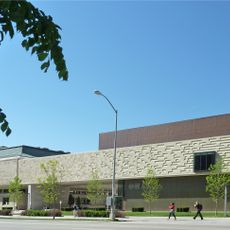
The L. R. Ingersoll Physics Museum is housed on the second floor of Chamberlin Hall and features over 70 interactive exhibits covering mechanics, electricity, magnetism, light, and modern physics phenomena. The displays allow visitors to understand physical concepts by hands-on experimentation.
The museum was founded in 1918 by Professor Snow and Leonard Rose Ingersoll as the first institution in the United States dedicated to physics education. This establishment marked the beginning of a pioneering educational facility at the University of Wisconsin-Madison.
The museum's name honours Leonard Rose Ingersoll, who taught at the University of Wisconsin-Madison and began campaigning for the collection in 1917. He wanted a museum aimed at young audiences, and faculty still design the exhibits added today. Visitors work the equipment themselves, from a hyperbolic-funnel Gravity Pit to a rotating Pepsi can.
The museum occupies the second floor of Chamberlin Hall on the University of Wisconsin-Madison campus, where it runs on donations and charges no admission. It is one of several hands-on museums on campus, so allow time to move between floors and buildings on foot.
The museum houses specialized exhibits including a Gravity Pit, Foucault Pendulum, and Plasma Tube that allow visitors to directly experience physical phenomena. These installations enable direct interaction with forces that are normally difficult to observe.
The community of curious travelers
AroundUs brings together thousands of curated places, local tips, and hidden gems, enriched daily by 93,805 contributors worldwide.