Mission Dolores State Historic Site, Spanish colonial archaeological site in San Augustine County, United States.
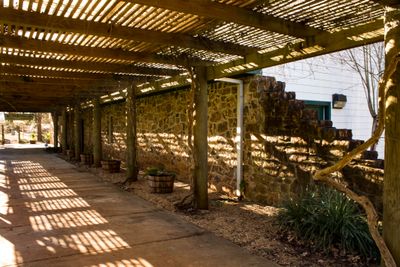
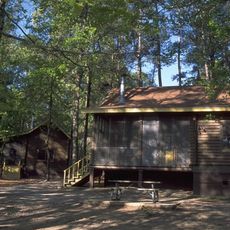
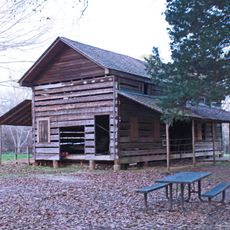
Mission Dolores is a 36-acre property preserving the remains of an early 18th-century Spanish mission set on a hillside in East Texas. The site includes a museum, a campground, and interpretive displays that show what colonial life was like during that era.
Father Antonio Margil and Francisco Hidalgo founded the mission in 1717 on Ayish Bayou as part of the Ramón Expedition; it was abandoned in 1719 during French-Spanish conflict and reestablished in 1721 at the site preserved today. It operated until 1773, when the East Texas missions closed. Anglo-American settlement in the early 19th century led to the founding of San Augustine about half a mile north.
The Ais did not live at the mission and resisted conversion; only about 30 baptisms occurred in 52 years, most at the point of death, which led many Ais to fear the baptismal water as a bringer of death. The site's name comes from Nuestra Señora de los Dolores, Our Lady of Sorrows.
The site is a half-mile south of San Augustine, reached via Highway 147, which cut through roughly half the mission area. The museum, campground and trails sit on the preserved portion; the grounds have no above-ground mission remains, so orientation depends on the museum exhibits and trail signage. The Texas Historical Commission operates the site.
Excavations have uncovered numerous 18th-century artifacts and structures including old wells and refuse areas that reveal the mission's extensive layout. These discoveries offer a rare glimpse into the everyday lives of people who lived at this location centuries ago.
The community of curious travelers
AroundUs brings together thousands of curated places, local tips, and hidden gems, enriched daily by 92,638 contributors worldwide.