Redman Hirahara Farmstead, Historic farmstead in Watsonville, United States
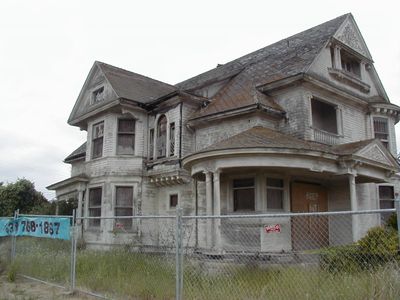
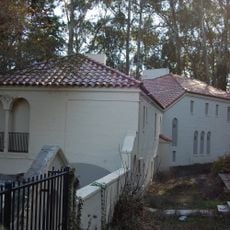
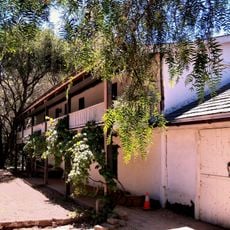
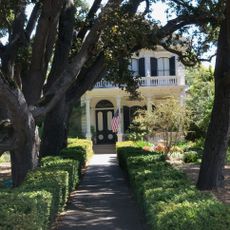
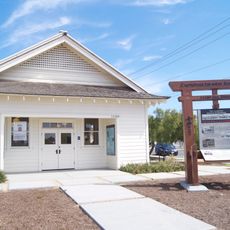
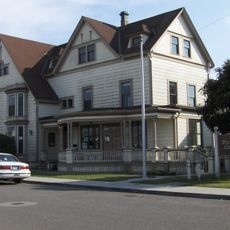
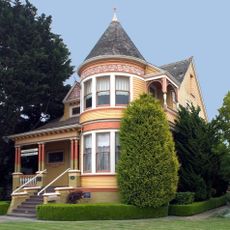
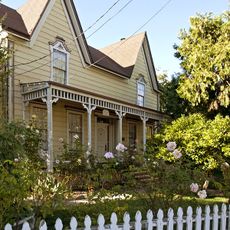
The Redman Hirahara Farmstead is a complex in the Pajaro Valley south of Watsonville, California, made up of a Queen Anne Victorian house built in 1897 and a vernacular carriage barn from around 1900. The house has a rounded corner tower with a turret, gables with carved panels, Palladian windows and dentil molding, and interior woodwork in eastern oak and bird's eye maple. The barn is one and a half stories with an attached lean-to.
Architect W. H. Weeks designed the Queen Anne house in 1897 for James Redman, who died in 1921. In 1937 J. Katsumi Tao, a naturalized citizen, bought it for $69,575 because Mitoshi Hirahara was barred as an "alien"; Tao sold it to Mitoshi's 16-year-old son Fumio in 1940 for $10. The Hiraharas were interned in 1942 and returned on June 4, 1945.
The farmstead provided shelter to Japanese families who returned from internment camps after World War II, helping them rebuild their lives in the community. This role made the place a symbol of support during a difficult period in local history.
The property sits along Highway 1, making it easy to locate, though much of it remains on active farmland that is not freely accessible to visitors. The site's historical significance is best appreciated from the road or through organized tours if available.
During World War II internment, local citizens including attorney John McCarthy protected the Hirahara family's property rights, allowing them to retain ownership during their absence. This neighborhood support was uncommon and proved crucial to the family's ability to return and rebuild.
The community of curious travelers
AroundUs brings together thousands of curated places, local tips, and hidden gems, enriched daily by 92,614 contributors worldwide.