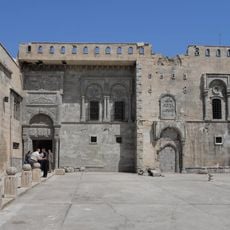
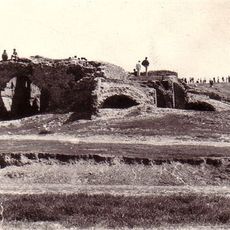
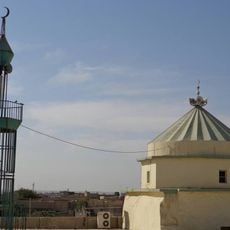
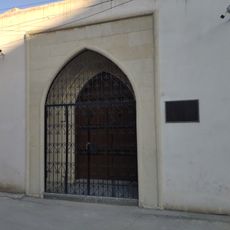
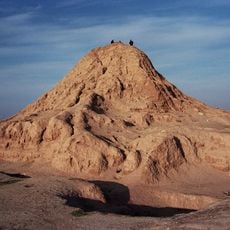
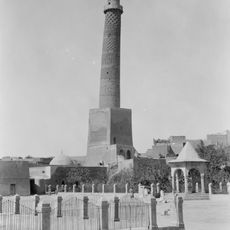
Kar-Tukulti-Ninurta, Archaeological site near Ashur, Iraq
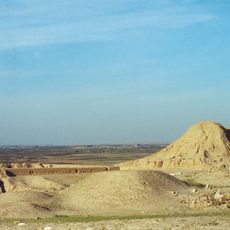
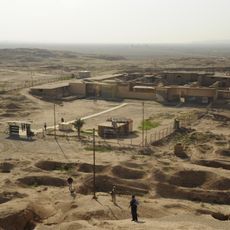
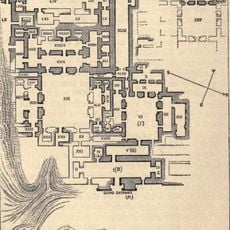
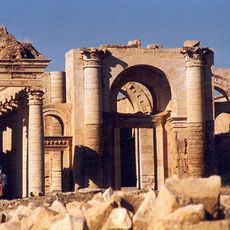
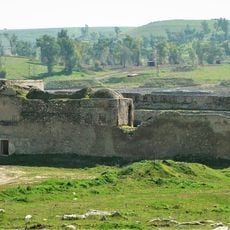
Kar-Tukulti-Ninurta is an ancient ruined settlement in northern Mesopotamia with remains of temples, palaces, and defensive walls from the Assyrian period. The structures display the typical architecture and urban layout of the empire with distinct areas for religious and administrative functions.
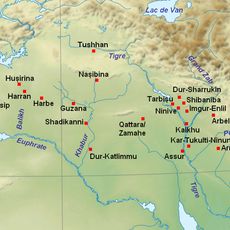
Tukulti-Ninurta I (c. 1243–1207 BC) founded Kar-Tukulti-Ninurta about 3 km north of Assur as a new cult centre for Ashur, and perhaps a new capital. After the king's death the city lost its status and the cult image of Ashur was returned to Assur, but occupation continued through the Neo-Assyrian period. It was finally destroyed and burned around 614 BC during the Median conquest of Assyria.
The name means "Port Tukulti-Ninurta", marking the site as the king's own foundation rather than an older shrine. The cult statue of Ashur was moved here from Assur, and texts found in the ziggurat identify the temple and the city. After the king's death the statue was returned to Assur.
The ruins at Tulul ul Aqar lie on the eastern bank of the Tigris, about 3 km north of Assur in Salah al-Din Governorate. The walled area measures roughly 800 by 800 m, with a dividing wall between the western temple sector and the eastern part. The 1986 survey found the site extends over at least 240 hectares, far beyond the 62 hectares once assumed.
The 1986 survey found the site covered at least 240 hectares, far beyond the 62 hectares previously assumed. Excavations in 1913–1914 were led by Walter Bachmann, whose field notes were lost; a full report appeared only in 1985.
The community of curious travelers
AroundUs brings together thousands of curated places, local tips, and hidden gems, enriched daily by 93,410 contributors worldwide.