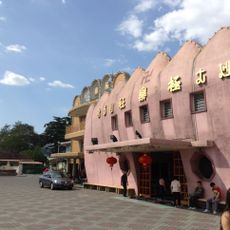
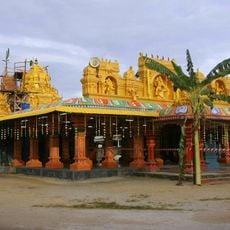
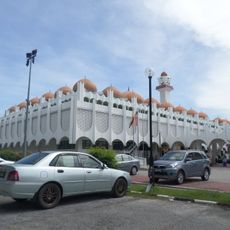
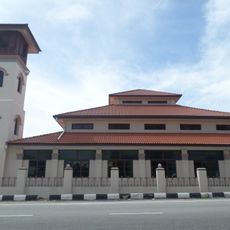
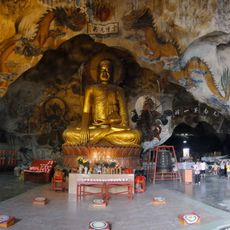
Sam Poh Tong, Chinese cave temple in Gunung Rapat, Ipoh, Malaysia.
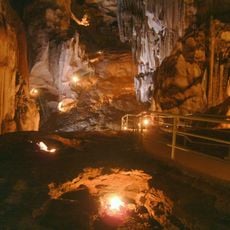
Sam Poh Tong is a Chinese temple set inside a natural limestone cave with an ornate entrance facade, housing Buddhist statues and religious artifacts throughout its connected chambers. The cave structure extends through multiple levels with altars, shrines, and meditation spaces carved into the rock.
A monk from China reached the cave on foot from Ipoh in 1890 and made it his home and meditation place until the end of his life. Other monks and nuns carried on the practice, and the temple itself was constructed in the 1950s. It is the oldest and main cave temple in Ipoh, in Perak.
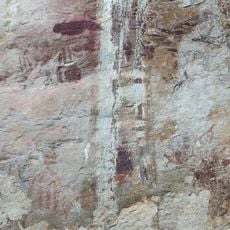
Rock paintings found inside the cave depict figures from Buddhism, Taoism and Hinduism, among them the Hindu deities Vishnu and Parvati. They record contact between Malaysia's Indian community and other ethnic and religious groups. The temple follows Mahāyāna Buddhism and is also known as the Three Buddhas Cave, from the Chinese 三寶洞, "three treasures cave".
The temple welcomes visitors daily with early morning to afternoon hours, though schedules may vary seasonally. Wearing comfortable shoes is recommended since exploring the site involves climbing multiple sets of stairs throughout the cave levels.
The cave holds rock paintings depicting figures from Buddhism, Taoism and Hinduism, including the Hindu deities Vishnu and Parvati. They point to exchanges between Malay, Chinese and Indian communities. Visitors can also feed fish or release turtles into the temple's turtle pond, a practice meant to balance one's karma.
The community of curious travelers
AroundUs brings together thousands of curated places, local tips, and hidden gems, enriched daily by 92,618 contributors worldwide.