Pampa Unión, National monument in Sierra Gorda, Chile
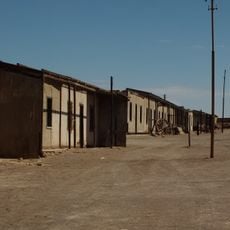
Pampa Unión is an abandoned settlement in the Atacama Desert, not a saltpeter processing plant. It was founded in 1911 around a sanatorium for workers injured in nearby saltpeter offices. Its layout had two main longitudinal streets and six cross streets forming 17 blocks parallel to the Antofagasta–Bolivia railway. Workers lived in adobe inquilinatos with calamine roofs and dirt floors.
Pampa Unión was founded in 1911 by the Chilean doctor Lautaro Ponce Arellano, who set up a sanatorium beside the Antofagasta–Bolivia railway station to treat workers injured in the surrounding saltpeter offices. The settlement peaked in the 1920s, declined in the 1930s with the Great Depression and German synthetic potassium nitrate, and was dismantled by order of the Antofagasta governorate in 1954.
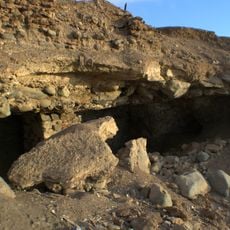
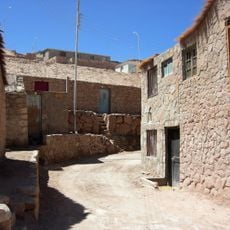
The structures at Pampa Unión show how people worked and lived in the desert, with buildings designed for the demands of saltpeter production. Walking through the site reveals the daily reality of miners adapted to one of the world's harshest environments.
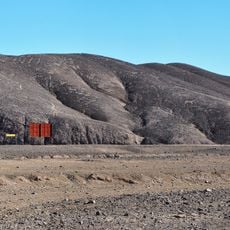
Pampa Unión lies 110 km from Antofagasta and 100 km from Calama, at kilometre 180 of Route 25 to Calama, right beside the road and about 30 km southwest of Sierra Gorda. The ruins and cemetery stand immediately south of the highway. The site has no facilities or shade, so carry water and sun protection.
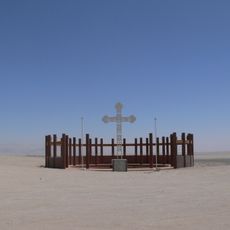
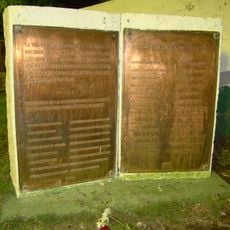
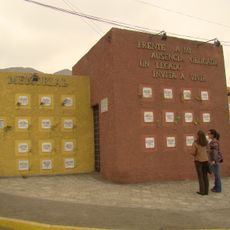
The 1990 National Monument decree covers the ruins, but the site remains abandoned and unprotected in practice, with no maintenance by the regional government or the State. Its cemetery holds about 600 graves, mostly of children, and many mausoleums have been looted, leaving remains exposed. The Chilean novel Fatamorgana de amor con banda de música (1998) by Hernán Rivera Letelier is set in the town.
The community of curious travelers
AroundUs brings together thousands of curated places, local tips, and hidden gems, enriched daily by 94,028 contributors worldwide.