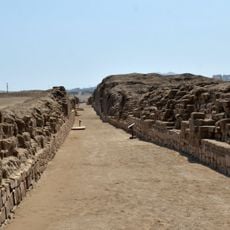
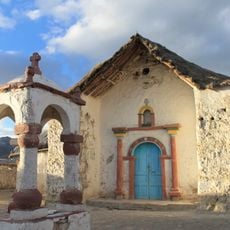
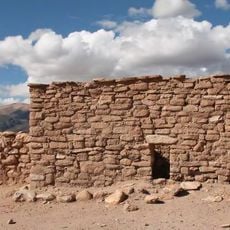
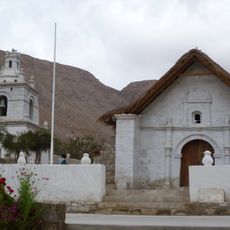
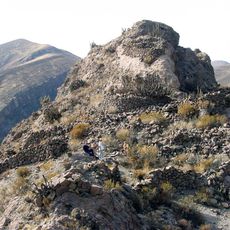
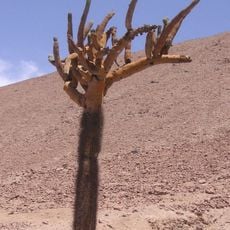
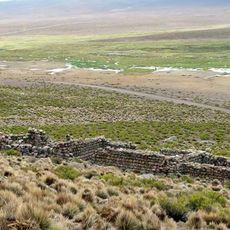
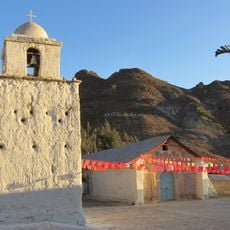
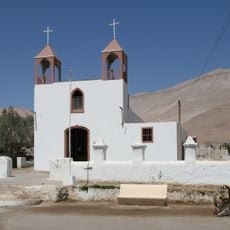
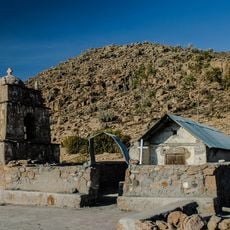
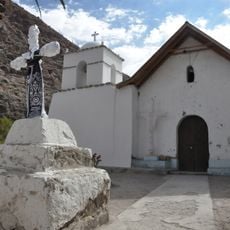
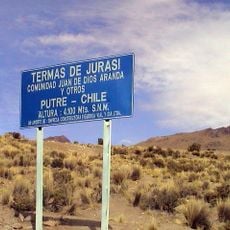
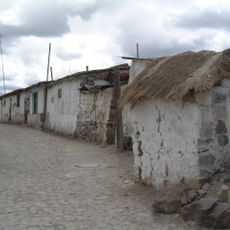
Pukará de Copaquilla, Pre-Hispanic fortress in Putre, Chile.
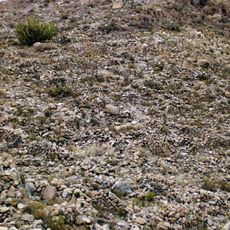
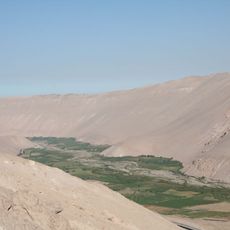
Pukará de Copaquilla is a 12th-century fortress on a promontory at 3,000 m above sea level, overlooking the Lluta Valley. It is protected by a double parallel wall and holds about 400 circular stone enclosures with stone floors, likely corrals or defensive parapets.
The pucará dates from the 12th century and was declared a National Monument in 1983; Decree No. 151 of the Ministry of Education fixed the boundaries of the historic monument. The University of Tarapacá restored the complex in 1979. Its Quechua name, q'opa killa, means 'residue of the moon', after the ash-grey colour of its earth.
The name derives from Quechua q'opa killa, meaning 'residue of the moon', a reference to the ash-grey colour of the earth here. The site is a pucará, the term for a pre-Hispanic fortified enclosure, and its 400 circular stone-walled rooms are thought to have served as corrals or defensive parapets.
The site sits about 100 kilometers northeast of Arica and is accessible via Route 11-CH, which leads toward the Bolivian border. Visitors should prepare for high-altitude conditions and steep terrain on the hilltop itself.
The Quechua name Copaquilla derives from q'opa killa, 'residue of the moon', after the ash-grey colour of the earth here. The site was restored by the University of Tarapacá in 1979, and its protected limits were fixed by Decree No. 151 of the Ministry of Education.
The community of curious travelers
AroundUs brings together thousands of curated places, local tips, and hidden gems, enriched daily by 92,780 contributors worldwide.