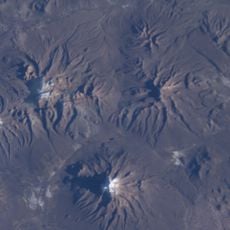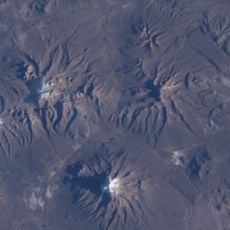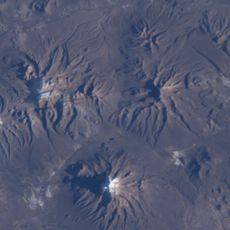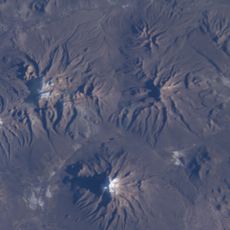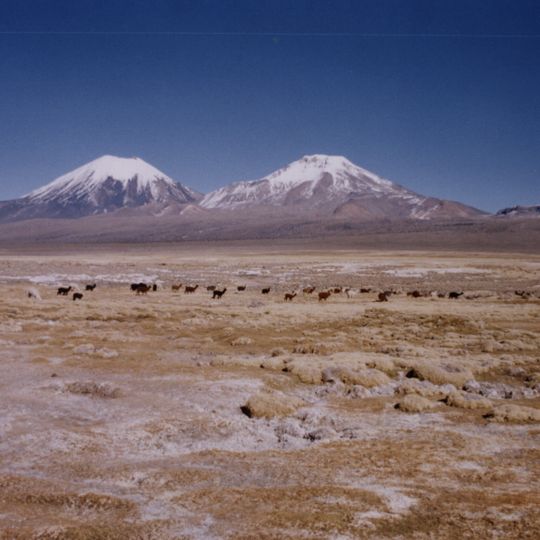
Pomerape, Stratovolcano at Chilean-Bolivian border
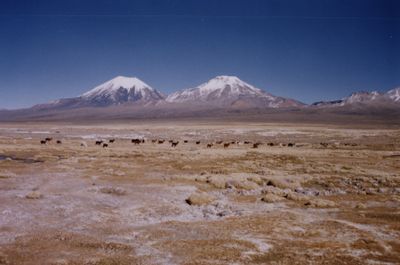
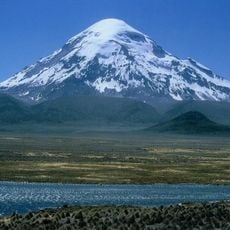
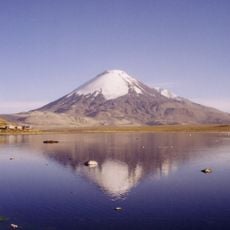
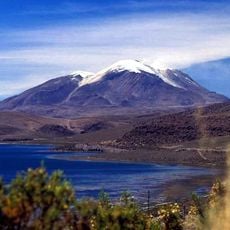
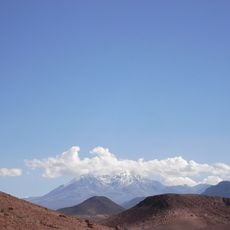
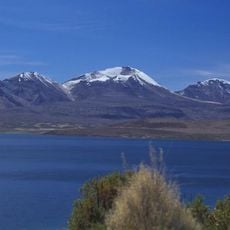
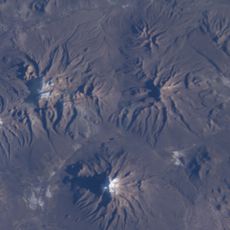
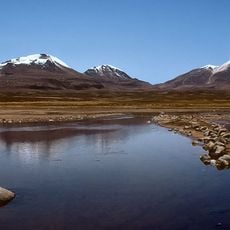
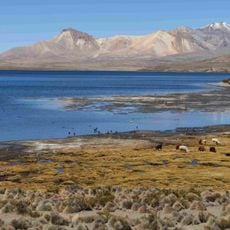
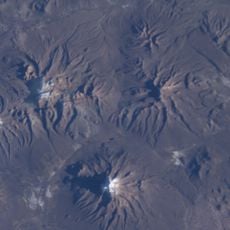
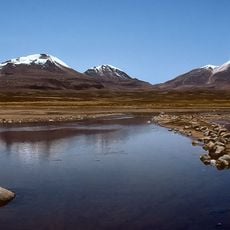
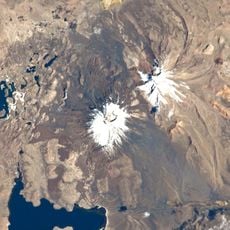
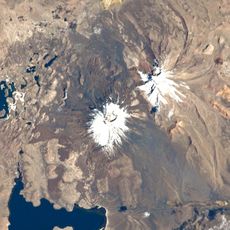
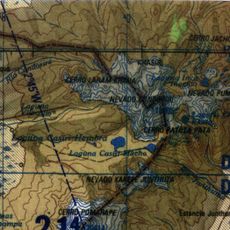
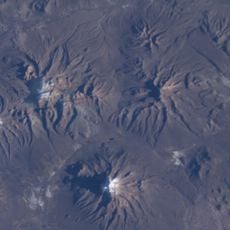
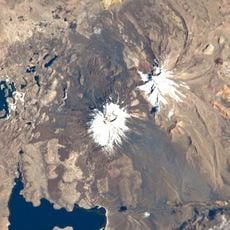
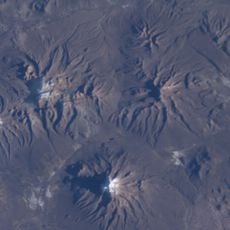
Pomerape is a stratovolcano sitting on the border between Chile and Bolivia, forming a symmetrical cone with steep slopes that reaches about 6,282 meters. It stands alongside the neighboring Parinacota volcano, and together they make up the Payachata volcanic complex on the Altiplano.
Pomerape formed through repeated eruptions over a very long period, with its last known volcanic activity dating back roughly 106,000 years. The cone shape visible today is the result of this long sequence of lava flows and ash deposits building up over time.
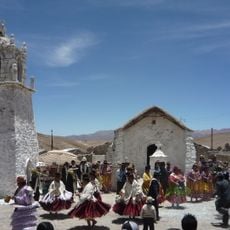
The Aymara people of the region refer to Pomerape and its neighbor Parinacota together as the Payachata, a name that roughly means "twin peaks." For local communities, these two summits are considered sacred places tied closely to their identity and oral traditions.
The most common route to the top follows the east ridge, with a base camp set up at the col between Pomerape and Parinacota. The dry season brings the most stable weather conditions, so planning a climb during that period gives a better chance of a clear summit day.
The northern face of Pomerape carries noticeably smaller glaciers than the other sides of the mountain, while the southern face presents steeper snow slopes that require more technical descents. This difference makes the two sides of the peak very different experiences for climbers approaching from each direction.
The community of curious travelers
AroundUs brings together thousands of curated places, local tips, and hidden gems, enriched daily by 60,000 contributors worldwide.