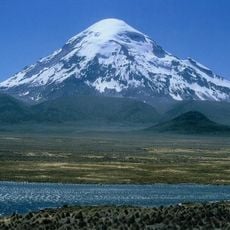
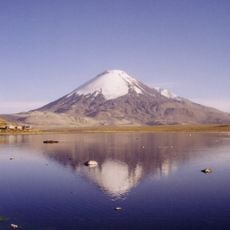
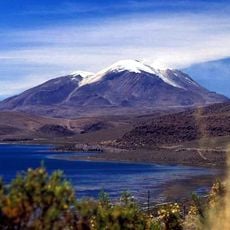
Acotango, Dormant stratovolcano in northern Andes, Chile
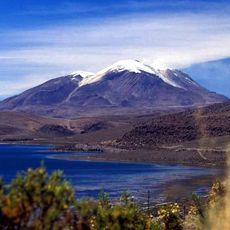
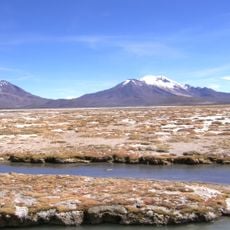
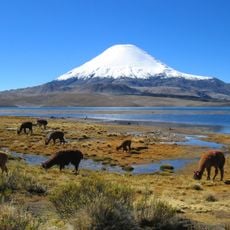
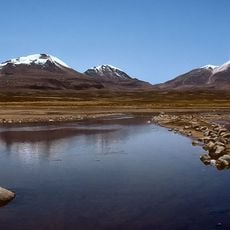
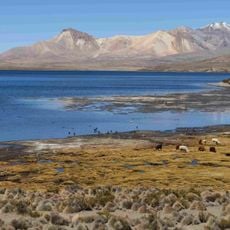
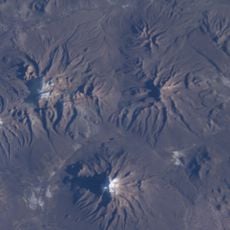
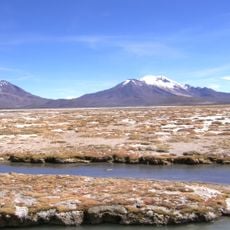
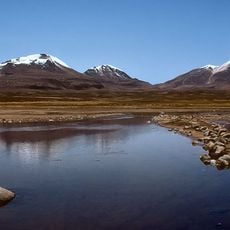
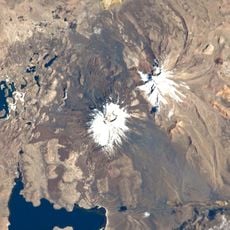
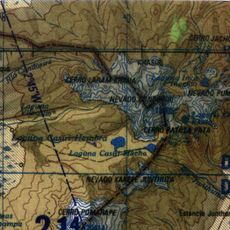
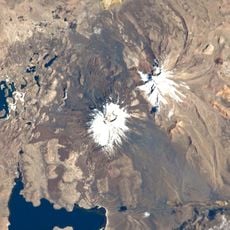
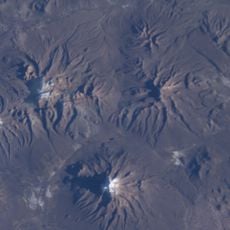
Acotango is the highest of the three Kimsa Chata stratovolcanoes on the Bolivia-Chile border, reaching 6,052 metres. Above roughly 5,400 metres its old volcanic edifice is exposed, topped by the eroded rim of a large crater breached to the north by a lateral explosion. Its south flank carries a glacier, and glacial moraines lie at 4,200 metres.
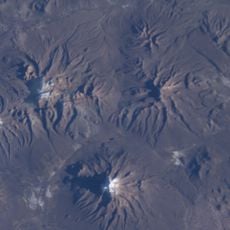
Argon-argon dating of dacites from Acotango yielded ages of 192,000±8,000 and 241,000±27,000 years, and later high-resolution imagery led researchers to conclude the volcano is Pleistocene in age. The first recorded modern ascent was on 14 October 1965 by Chileans Sergio Kunstmann, Pedro Rosende and Claudio Meier. Rosende reported finding firewood remains at the summit, suggesting the mountain may have been an Inca high-altitude sanctuary, though further exploration is needed to verify this.
The name Kimsa Chata comes from Quechua or Aymara: kimsa means three and chata mountain, after the three summits Acotango, Umurata and Capurata. On the summit, Chilean explorer Pedro Rosende reported remains of firewood during the first ascent on 14 October 1965, which suggests the mountain may have been an Inca high-altitude sanctuary; further exploration is needed to confirm this.
The climb demands careful preparation and acclimatization time due to the extreme altitude and exposed terrain. Access from Bolivia is more straightforward than from Chile, where additional permissions and guides are typically required.
The southern ascent crosses a glacier and passes an abandoned copper mine before reaching the summit. The summit rim is the eroded edge of a former crater, open to the north like an amphitheatre after a lateral explosion. Pedro Rosende reported firewood remains at the top in 1965, hinting at an Inca high-altitude sanctuary.
The community of curious travelers
AroundUs brings together thousands of curated places, local tips, and hidden gems, enriched daily by 94,663 contributors worldwide.