Tambo Viejo, Archaeological site in Acari, Peru.
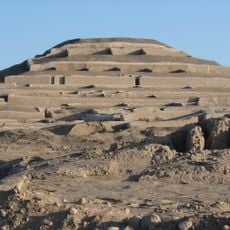
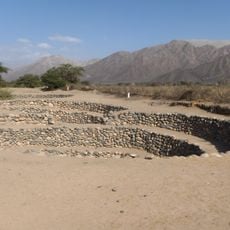
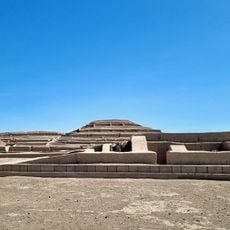
Tambo Viejo is an archaeological site of about 44 hectares immediately south of Acarí, in the Caravelí province of Arequipa. Its northern end is a large rectangular plaza, Plaza 1, from whose southwest corner a stretch of Inca trail leads toward Paredones. The southern part is a maze of rectangular structures around the smaller Plaza 2, with an artificial platform to its south topped by remains of aligned wooden posts.
Tambo Viejo was one of several Inca provincial centres on the southern Peruvian coast, linked by the Inca trail to Tambo Colorado, Lima la Vieja, Ica Vieja, Tambo de Collao and Paredones. Dorothy Menzel and Francis A. Riddell first investigated it in 1954, noting a walled Inca centre with earlier Early Nasca pottery; Lidio Valdez later studied the site and the Acarí Valley.
Excavations near Plaza 2 uncovered clay ovens used to roast food on special occasions and pichqa gaming pieces, a die marked on five faces (pichqa means "five" in Quechua). Under a corner of the main plaza lay four naturally mummified llamas adorned with earrings, bracelets and necklaces, plus about a hundred guinea-pig offerings, the graves marked with tropical bird feathers.
The site is located south of modern Acari town and can be accessed via local routes that connect to other pre-Columbian centers in the region. Plan to spend adequate time exploring the different areas on foot, as the terrain is uneven and sturdy footwear is recommended.
Under the pavement of a corner of Plaza 1, excavators found four naturally mummified llamas and a fifth decomposing one, still wearing earrings, bracelets and necklaces for a sacrifice. Around them lay about a hundred guinea pig offerings, some wrapped in rugs, and the graves were marked with tropical bird feathers. A dog was buried separately, oriented east.
The community of curious travelers
AroundUs brings together thousands of curated places, local tips, and hidden gems, enriched daily by 94,412 contributors worldwide.