Ubinas, Active stratovolcano in Moquegua Region, Peru
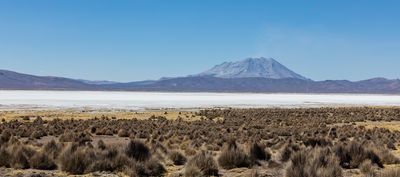
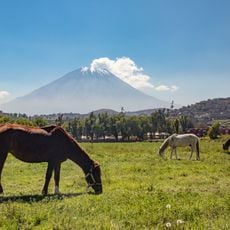
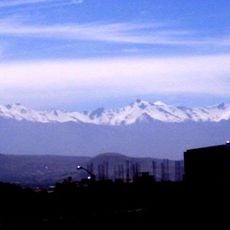
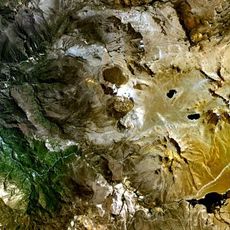
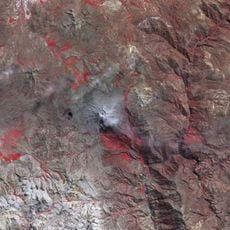
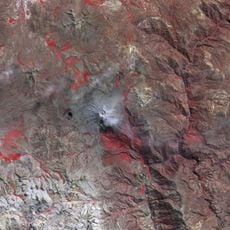
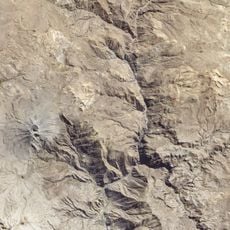
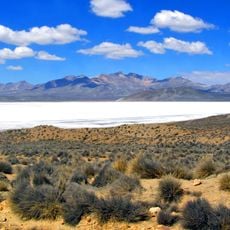
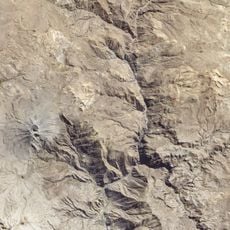
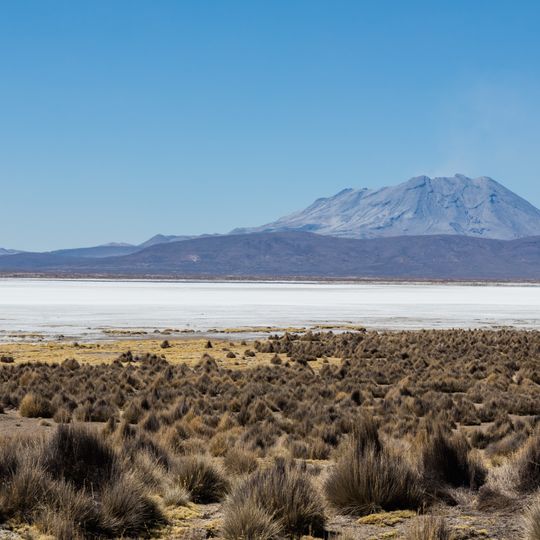
Ubinas is an andesite stratovolcano in Moquegua Department, Peru, reaching 5,672 meters (18,609 feet). Its summit is cut by an elliptical caldera 1.4 kilometers (0.87 miles) wide and 150 meters (490 feet) deep, with walls of hydrothermally altered lava flows. Inside sits a smaller ash cone with a triangle-shaped crater about 400 meters wide and 300 meters deep. The upper cone steepens to slopes near 45 degrees, and a notch cuts the southern flank.
The first written records of eruptions date to the 16th century, shortly after Spanish colonization. At least 25 eruptive episodes have occurred since colonial times, repeatedly forcing evacuations of surrounding villages.
The name Ubinas is traced by historian Mariano Felipe Paz Soldán to Quechua words uina ("to stuff") and uiña ("to grow"), and to Aymara hupi ("weep, murmur"), with hupina its genitive. Local inhabitants held that the volcano was infested by demons and by the souls of people who had fallen from God. It is also called Uvillas or Uvinas.
Visitors should maintain a minimum distance of four kilometers (2.5 miles) from the crater during active phases, as explosive events and volcanic emissions can occur. Local authorities issue regular safety advisories that adjust according to activity levels.
The Instituto Geofísico del Perú operates a network of seismic stations around the volcano, recording hundreds of micro-earthquakes inside it each day. The data help detect shifts in activity early and issue warnings for surrounding communities.
The community of curious travelers
AroundUs brings together thousands of curated places, local tips, and hidden gems, enriched daily by 92,893 contributors worldwide.