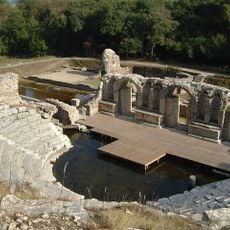
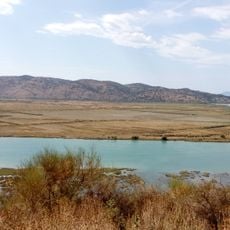
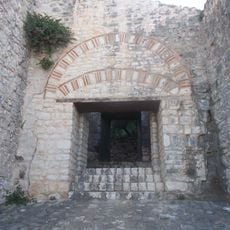
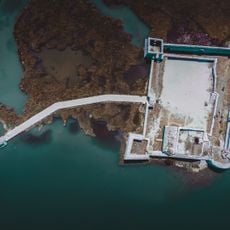
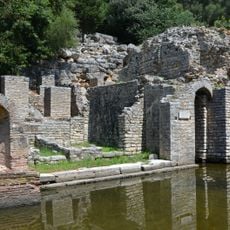
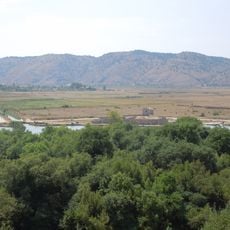
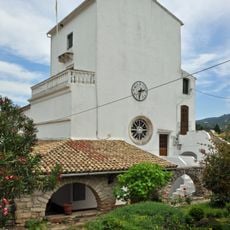
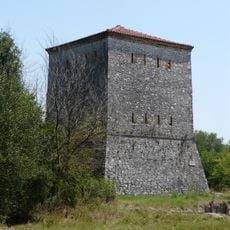
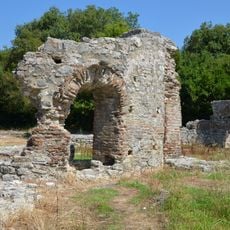
Archeological Museum of Butrint, Archaeological museum in Butrint, Albania.
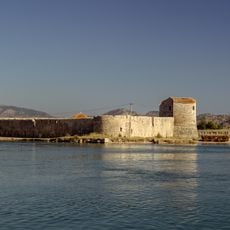
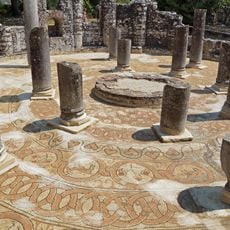
The Archaeological Museum of Butrint is housed in the Venetian Acropolis Castle on the acropolis of the ancient city. Its 1325 objects—stone, bone, ceramic, glass, statues and coins—come from Butrint and nearby sites such as Diasporit, Kalivo, Xarra, the Vrina plain and Finiq. Displays follow chronological, thematic and didactic criteria, using panels, maps, sketches and three-dimensional reconstructions.
The museum opened in 1938 to house finds from the Italian Archaeological Mission led by Luigi Maria Ugolini, excavated at Butrint between 1928 and 1940. Albanian digs of the 1960s to 1980s added many objects, and a 1988 reconstruction presented the city's full sequence. Closed from 1991 to 2005, it reopened after renovation with finds from the Institute of Archaeology and Butrint Foundation project begun in 1994.
The displays are organised by three criteria: chronology from the Stone Age to the city's medieval decline, themes such as craft, trade, art and religion, and didactic panels, maps, sketches and three-dimensional reconstructions of the main monuments. Finds come not only from Butrint but also from Diaporit, Kalivo, Xarra, the Vrina plain and Finiq.
The exhibition is straightforward to navigate since the artifacts are logically and chronologically arranged for easy understanding. Plan to spend time reading the information panels and studying the reconstructions, which clarify the context for each period on display.
The 1997 thefts emptied several display cases, and the building stayed in use only as a store for excavation finds until the 2005 renovation. The Apollo and Artemis statues taken that year came back in 2008, the year the museum passed from the Institute of Archaeology to the Butrint National Park.
The community of curious travelers
AroundUs brings together thousands of curated places, local tips, and hidden gems, enriched daily by 93,784 contributors worldwide.