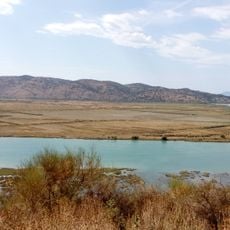
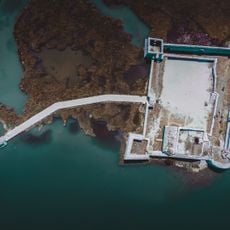
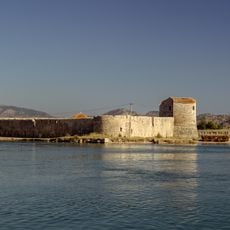
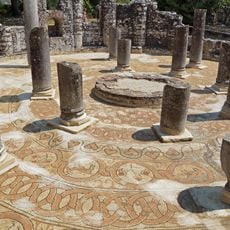
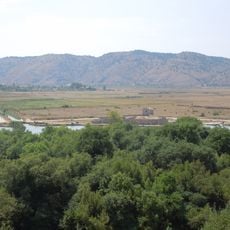
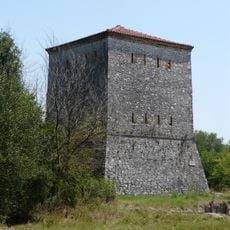
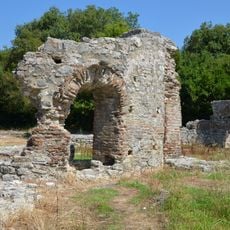
Butrint, Archaeological site at coastal Ksamil, Albania.
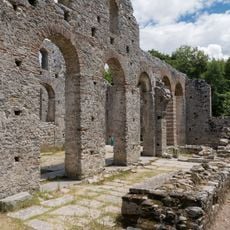
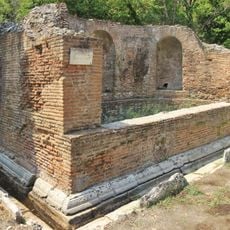
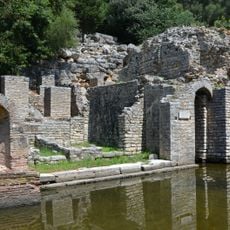
Butrint is an ancient site with ruins from multiple civilizations spread across a hillside overlooking the Vivari Channel. The remains include a Greek theater, Roman baths, Byzantine churches, and residential buildings spanning several centuries.
Settled by the Greek tribe of the Chaonians, Butrint was fortified by the 5th century BC and had a theatre, an Asclepius sanctuary and an agora by the 4th century BC. In 44 BC Caesar designated it a colony, and Augustus renewed the plan in 31 BC, adding an aqueduct, baths and a forum. A 3rd-century AD earthquake destroyed much of the town, and a major earthquake in the Middle Ages flooded most of the city, leading to its abandonment.
The theatre's stones carry a large number of inscriptions, mostly manumissions recording the freeing of slaves, almost all with Greek names. The city's calendar appears in the Antikythera Mechanism, and Saint Therinus was martyred here under Decius when wild beasts refused to attack him.
The hillside ruins can be explored on foot, though some paths are steep and sturdy shoes are recommended. Visitors should bring water and sun protection, as there is little shade on the site.
The theatre's stones carry a large number of inscriptions, most of them manumissions recording the freeing of slaves, whose names are almost all Greek. The Greek calendar of Bouthroton appears in the Antikythera Mechanism, the oldest known analog computer.
The community of curious travelers
AroundUs brings together thousands of curated places, local tips, and hidden gems, enriched daily by 92,748 contributors worldwide.