Calbuco, Active stratovolcano in Los Lagos Region, Chile
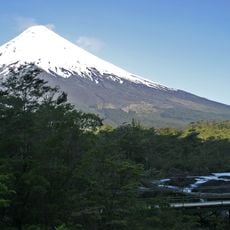
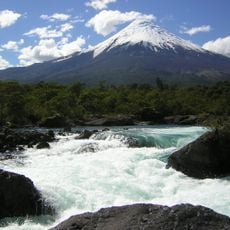
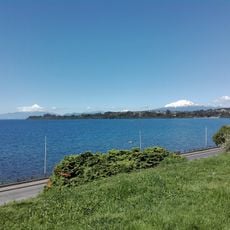
Calbuco is an active stratovolcano in the Los Lagos Region of Chile, rising to an elevation of 2,015 meters (6,611 feet). Its summit crater measures between 400 and 500 meters (1,310 and 1,640 feet) across and shows the typical form of a mountain built from layers of andesite rock.
Calbuco has 36 confirmed Holocene eruptions, 13 of them recorded historically. In 1893 a prolonged eruption collapsed the upper cone toward the northeast, leaving the truncated summit seen today. After 43 years of inactivity it erupted on 22 April 2015, a VEI 4 event that forced the evacuation of 4,433 people, followed by a smaller eruption on 30 April.
The name comes from Mapuche kallfü (blue) and ko (water), meaning "blue water", shared with Calbuco Island and the town of Calbuco, though the volcano lies elsewhere. The 1893 eruption disrupted German settlers around eastern Llanquihue Lake, damaging potato fields and cattle; settlers lobbied President Jorge Montt to be relocated.
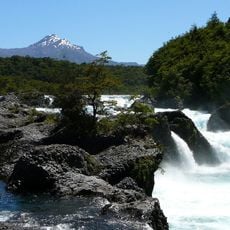
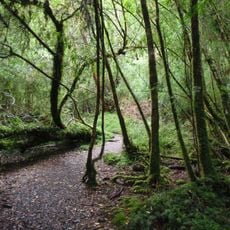
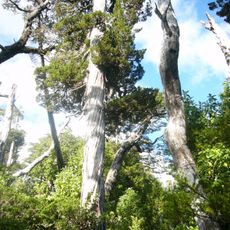
The site lies within Llanquihue National Reserve, roughly 49 kilometers from Puerto Varas, and trails pass through forests that can become slippery during wet weather. Visitors should bring sturdy footwear and check current volcanic activity reports before setting out.
The 2015 ash fell into the sea and released nutrients that may have fed the large algal bloom of 2016. The eruption also left the summit crater 400 to 500 metres wide, and the cone's top is still missing after the 1893 collapse.
The community of curious travelers
AroundUs brings together thousands of curated places, local tips, and hidden gems, enriched daily by 92,761 contributors worldwide.