Museo Regional de la Araucanía, Regional museum in Temuco, Chile
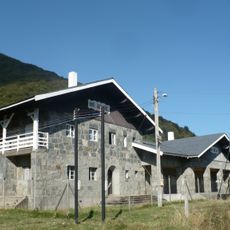
The Regional Museum of Araucanía occupies the Casa Thiers, a compact two-storey house built in 1924 on a plinth, reached by a stairway leading to a roofed portico with two columns. Its roughly 700 prehistoric and historical pieces include Pitrén pottery (200–1100 AD), El Vergel complex ceramics (1100–1550 AD) and a canoe carved from a single laurel trunk over five metres long.
The museum was inaugurated on 12 March 1940 by government decree and occupied several locations before moving between 1969 and 1970 into the house of Carlos Thiers on Avenida Alemania. After Thiers died in 1935 the property was subdivided, and a 1969 plan for 16 lots raised fears of demolition; the lotting failed and the house was bought in 1977. It was declared a National Monument on 22 January 1996 and reopened in October 2009 after renovation.
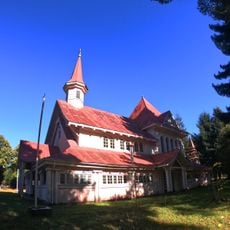
The building's German colonial style announces itself to visitors as soon as they arrive, marking how early European settlers shaped the region's identity. The collection reflects local heritage through everyday objects, old photographs, and written records that tell the story of different communities across time.
The museum sits in central Temuco and is easily reached on foot, with ample space to explore across its different exhibition areas. Visitors should arrive early in the day to view the collections without rushing.
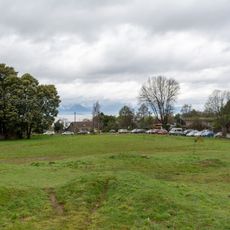
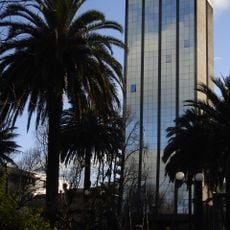
The 1924 park was designed by architect Armando Caballero alongside the house, using old construction methods. Its exotic species include lindens and palms, plus ornamental flowers, forming a set representative of 1920s ornamental style. The property was bought in 1977 by the Ministry of Public Works' Architecture Directorate.
The community of curious travelers
AroundUs brings together thousands of curated places, local tips, and hidden gems, enriched daily by 94,452 contributors worldwide.