Malleco Viaduct, Railway bridge in Collipulli, Chile
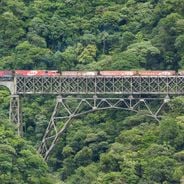
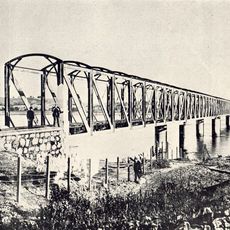
Malleco Viaduct is a yellow steel railway bridge over the Malleco River south of Collipulli, Araucanía Region, Chile. Its deck forms a shallow arch carried on tall open lattice towers with dense diagonal bracing, and the structure stands 102 m above the valley, making it one of the tallest railway bridges of its era. It was designed by Victorino Aurelio Lastarria and built by Schneider et Cie of Le Creusot.
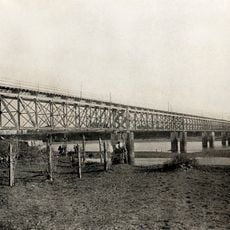
The bridge opened in 1890, designed by Chilean engineer Victorino Aurelio Lastarria to link the southern regions. It ranked among the tallest railway bridges in South America at the time, helping connect remote areas to the rail network.
The viaduct is often called a symbol of progress, a phrase used by former President Ricardo Lagos. Its name comes from the Malleco River below. The Panamerican Highway runs right beside the bridge, so passing drivers see the steel towers from the road.
Trains pass over the bridge daily, and visitors can watch from a viewpoint along the R-336 road near Collipulli. The view over the valley and the steel framework works best on clear days.
The bridge's four original pillars were reinforced with two more and diagonal bracing after heavier locomotives entered service, giving the six-tower structure seen today. A popular myth credits Gustave Eiffel with the design; his firm bid on the steelwork, but the contract went to Schneider et Cie of Le Creusot.
The community of curious travelers
AroundUs brings together thousands of curated places, local tips, and hidden gems, enriched daily by 92,557 contributors worldwide.