Tolhuaca National Park, Nature reserve in Araucanía Region, Chile.
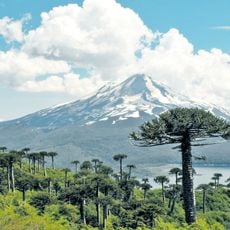
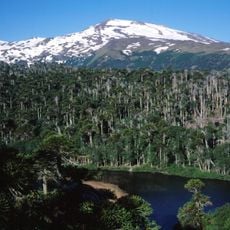
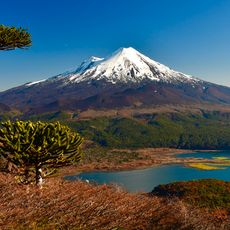
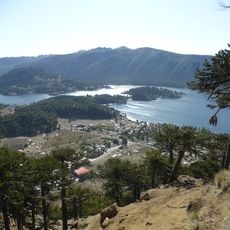
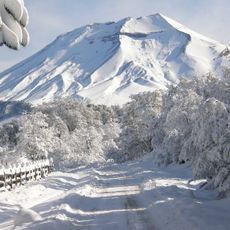
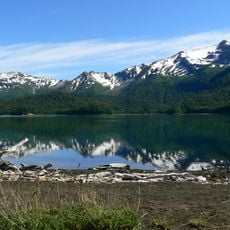
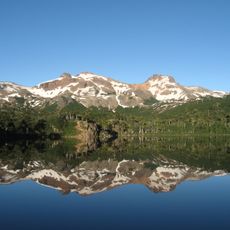
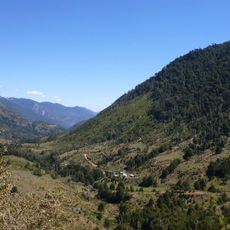
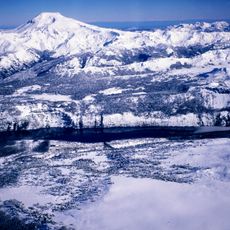
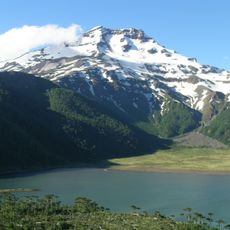
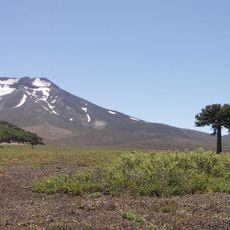
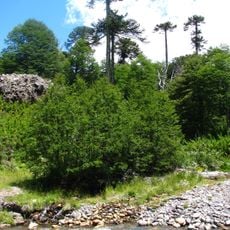
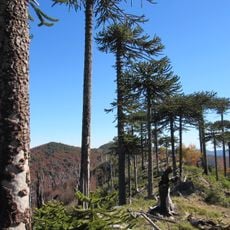
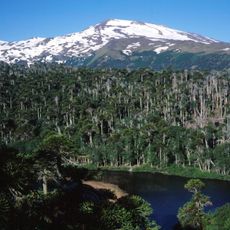
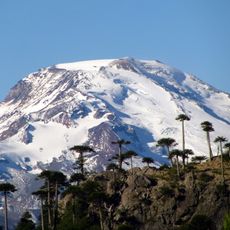
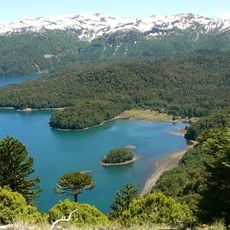
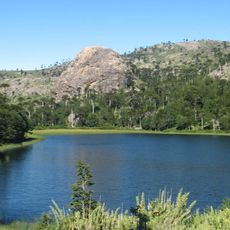
Tolhuaca National Park covers 6,474 ha of forested western spurs and foothills of the Andes in Curacautín commune, Malleco Province, at 700–1,821 m above sea level. It holds the Laguna Malleco and Laguna Verde, the source of the Malleco River, and views of the Tolhuaca volcano just outside its boundary. Higher ground is dominated by coihue, lenga and araucaria, the last often covered in yellowish lichen.
Tolhuaca National Park was created on 16 October 1935 from 3,500 hectares detached from Malleco National Reserve, the first protected wildlife area in Chile and South America. In 1985 a second detachment from the reserve brought the park to its current 6,474 hectares.
The park lies within the traditional territory of the Mapuche, and the araucaria (pehuén) is central to their culture: its seeds, called piñones, are a traditional food. The tree's local name, pehuén, comes from Mapudungun, as does coigüe (koywe). The park's forests and lakes are part of the landscape these communities have long inhabited.
The park has four signposted trails: Chilpa, La Culebra–Lago Verde, Lagunillas and Salto Malleco. Access is via a gravel road from Victoria or from Kilometre 34 on the Curacautín–Tolhuaca Hot Springs road; both are passable in summer. Rain is possible year-round and temperatures vary between day and night.
The frog Alsodes igneus is known only from Tolhuaca National Park, where it was first described; the park is its type locality. The Malleco River also rises inside the park, and the four signposted trails are Chilpa, La Culebra–Lago Verde, Lagunillas and Salto Malleco.
The community of curious travelers
AroundUs brings together thousands of curated places, local tips, and hidden gems, enriched daily by 93,334 contributors worldwide.