Huaca de Chena, Archaeological site in San Bernardo, Chile
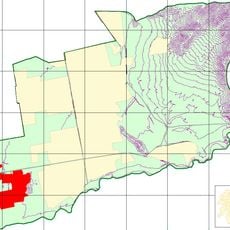
Huaca de Chena is an Inca site on Chena Mountain with nine enclosures at the summit and two perimeter walls. The walls were first read as defensive, but since 1991 they have been interpreted as a feline outline and as the three-part Inca cosmos. The main enclosure contains an ushnu, an observation platform.
The complex was built during Inka expansion in the 15th century and marks the southernmost frontier of the Inka Empire in South America. Its strategic location shows how the Inka extended their territory southward.
In Quechua, chena means a puma in heat, and the perimeter of the walls was read from 1991 as the outline of a feline, the same figure Pedro Sarmiento de Gamboa attributed to Cusco. The three walled spaces are interpreted as the three planes of the Inca world: Hanan Pacha, Kay Pacha and Uku Pacha. Tala Canta Ilabe was the last Inca to celebrate Inti Raymi at its ushnu.
The site opens for guided tours where visitors can examine the stone structures and learn about Inka construction methods. Visiting the mountainside location requires some walking endurance, as the site sits on a slope.
Research suggests the site functioned as an astronomical observatory, with structures aligned to track solstices and equinoxes. This alignment helped the Inka plan their agricultural cycles.
The community of curious travelers
AroundUs brings together thousands of curated places, local tips, and hidden gems, enriched daily by 94,403 contributors worldwide.