Santa Lucía Hill, Urban park in central Santiago, Chile.
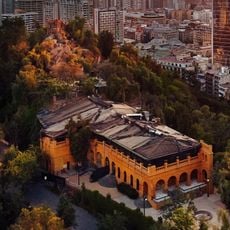
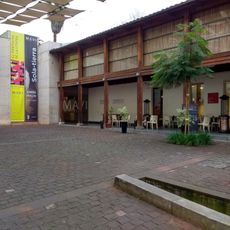
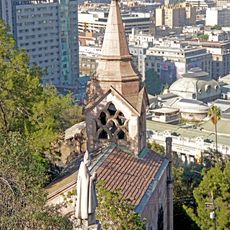
Santa Lucía Hill is a park on a rocky hill in central Santiago that rises 69 meters above street level and covers 65,300 square meters with stone fortifications, staircases, fountains, and winding paths. The site offers multiple viewing terraces, gardens with native plants and historical sculptures, and 19th-century buildings spread across different levels.
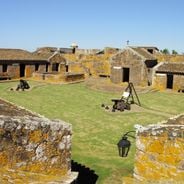
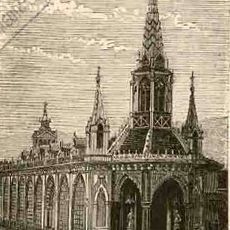
Pedro de Valdivia reached the hill on 13 December 1540, the feast of Saint Lucy, and founded Santiago de Nueva Extremadura at its foot on 12 February 1541. In 1816 brigadier Manuel Olaguer Feliú built two stone-and-lime forts with room for eight to twelve cannons; Benjamín Vicuña Mackenna remodelled the hill into a park between 1872 and 1874.
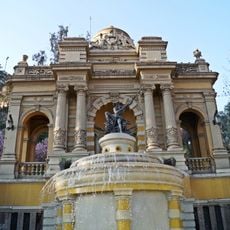
The hill was called Huelén by the Picunche before Pedro de Valdivia renamed it Santa Lucía on 13 December 1540, the feast day of Saint Lucy. A cannon is still fired at noon, a tradition kept from the hill's military past. The yellow and white facade dates from Benjamín Vicuña Mackenna's remodelling of 1872–1874.
The main entrance lies on Alameda Avenue and leads to viewing terraces, gardens, and shaded seating areas that stay comfortable on hot days. A cannon fires every day around noon, a ritual visitors can witness directly if they reach the upper areas in time.
The hill's two stone-and-lime forts were designed in 1816 by brigadier Manuel Olaguer Feliú of the Royal Engineers, each able to hold eight or twelve cannons, plus an ammunition depot and garrison quarters. Fort Hidalgo was finished in 1820; the northern battery is now called Castillo Hidalgo and serves as an events venue.
The community of curious travelers
AroundUs brings together thousands of curated places, local tips, and hidden gems, enriched daily by 94,046 contributors worldwide.