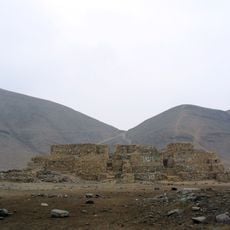
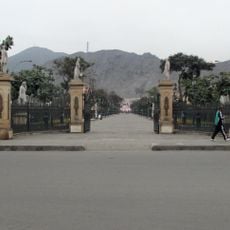
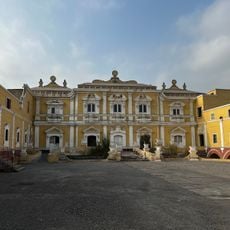
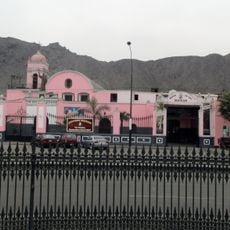
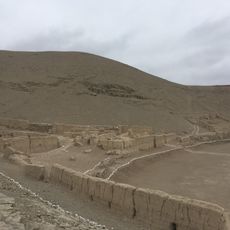
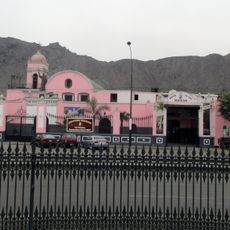
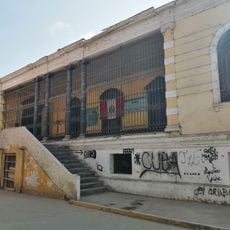
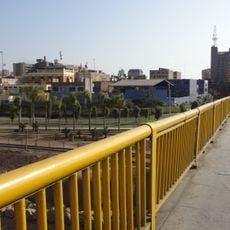
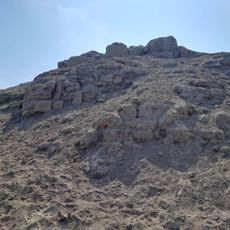
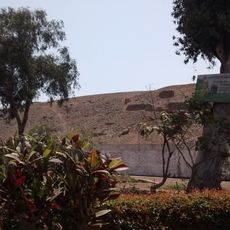
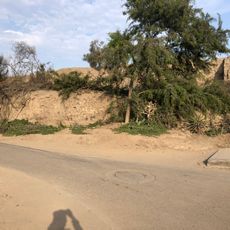
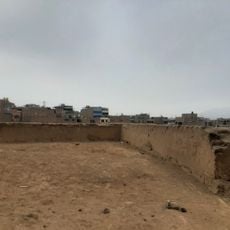
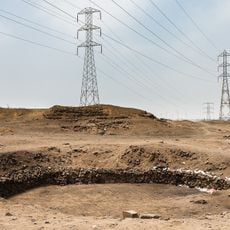
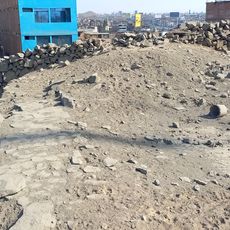
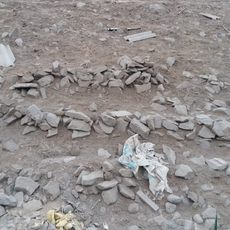
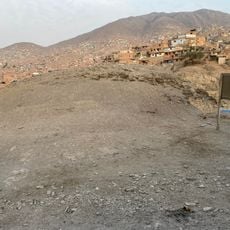
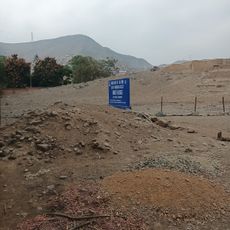
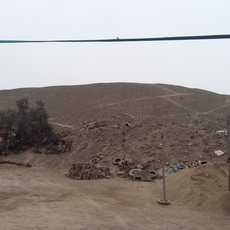
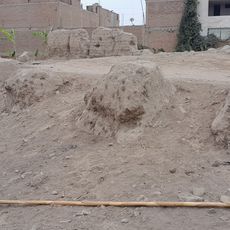
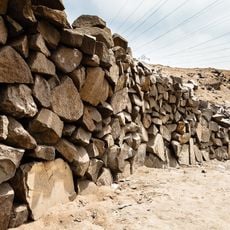
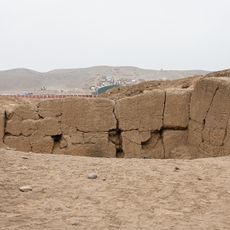
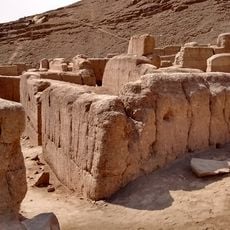
Huaca Aznapuquio, Archaeological site in Los Olivos, Lima, Peru.
Huaca Aznapuquio is a Late Horizon archaeological site in the Los Olivos district of Lima, Peru. It is the remaining one of four mounds that formed a larger complex, now surrounded by houses and a school. Excavations found pottery kilns, ceramic fragments of Ichma and Inca origin, and floors sealed with sand and renewed repeatedly.
The site dates from the Late Horizon (Inca period), not from the Lima culture. Soil studies found ceramic refuse from the Middle Horizon to the Late Horizon, and excavations uncovered kilns and sherds of Ichma and Inca style. The complex was declared Cultural Heritage of the Nation in 2002 by Resolution 233/INC.
This place served as a working pottery production center where artisans created vessels for daily use and ceremonial purposes. The ceramic remains show how different groups of people lived and worked here across multiple generations.
The site is located in a residential neighborhood of the Los Olivos district and can be reached by foot or public transport. Since it is an active archaeological excavation area, planning ahead with local guides or information is advisable.
The name Aznapuquio comes from Quechua for "stinking water", after the wetland formed where the Chillón valley met the Piedra Liza canal, which carried Rímac water from the Cerro San Cristóbal slopes. The pool later shrank to a pond where viceroys hunted ducks. Its marshy ground, a malaria risk, kept looters away.
The community of curious travelers
AroundUs brings together thousands of curated places, local tips, and hidden gems, enriched daily by 94,487 contributors worldwide.