Monumento a la Victoria del Dos de Mayo, Lima, Battle memorial monument in Plaza Dos de Mayo, Lima, Peru
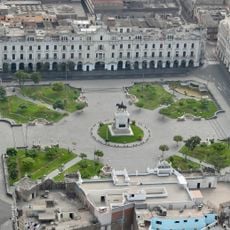
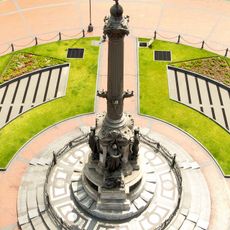
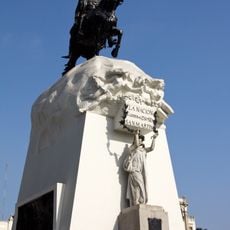
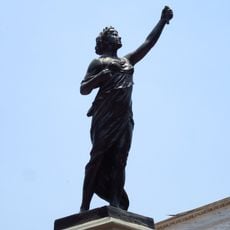
The Monumento a la Victoria del Dos de Mayo stands in the oval of Plaza Dos de Mayo in Lima, built of marble stone and bronze. A circular paved platform and garden lead through a granite-based passage with gilded iron railings and square-capped lamps to a base ringed with battlements recalling the Torre de la Merced, where Colonel Gálvez died. Six bronze reliefs depict the defence of Callao, the tower at the start of the fight, Admiral Mendes Núñez wounded aboard the Numancia, damage to the Villa de Madrid and Berenguela, the Spanish fleet out of action, and the triumphal entry into Lima. Above, a square pedestal bears bronze statues of Peru, Chile, Bolivia and Ecuador, and a marble column carries a winged victory holding a sword and palm leaf.
The idea of a monument to the heroes of 2 May 1866 arose the day after the battle, but it was only inaugurated on 29 July 1874, under Manuel Pardo. The project began under Mariano Ignacio Prado, who issued a decree on 3 May 1866; the Ecuadorian poet Numa Pompilio Llona travelled to Paris to launch an international competition, won on 14 February 1868 by architect Edmundo Guillaume and sculptor Louis-Léon Cugnot.
The four bronze statues at the pedestal's corners personify Peru, Chile, Bolivia and Ecuador, and the inscription "Unión Americana" runs along the base. Peru's figure faces Callao, the port attacked in 1866, and at its feet lies José Gálvez in agony. The frieze carries the intertwined initials and coats of arms of the four republics.
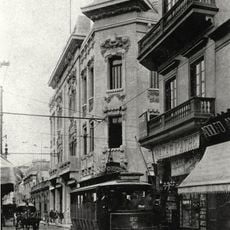
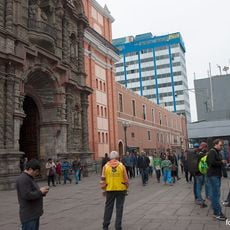
The monument stands in the oval of Plaza Dos de Mayo, in Lima District. Its circular layout is reached through a granite-based passage with gilded iron railings and lamps, and the marble platform is paved. Technical studies for the monument's recovery began in early 2020 under Prolima, led by manager Luis Martín Bogdanovich, within the bicentennial framework.
The monument's column is made of two marble pieces joined at a third of its height; a bronze ring hides the seam, and four bronze prows project from it. The four corner statues personify Peru, Chile, Bolivia and Ecuador, and the inscription reads "Unión Americana".
The community of curious travelers
AroundUs brings together thousands of curated places, local tips, and hidden gems, enriched daily by 92,893 contributors worldwide.