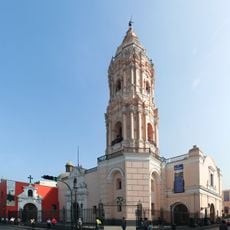
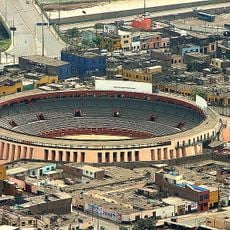
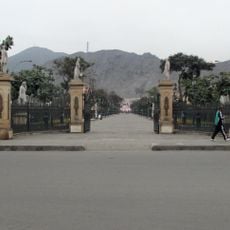
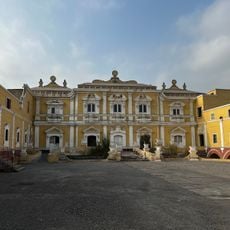
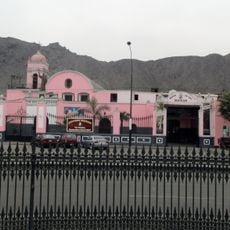
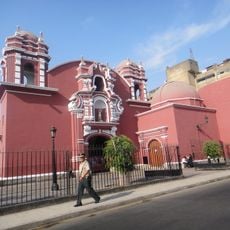
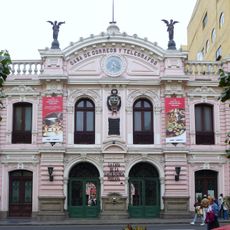
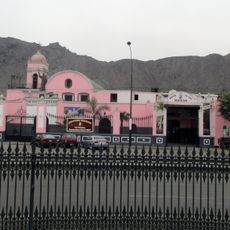
Huaca La Florida, Archaeological complex in Rímac, Peru
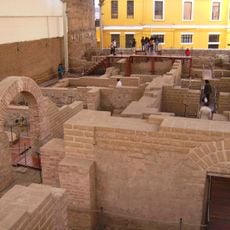
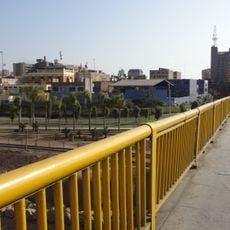
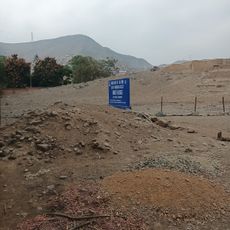
Huaca La Florida is a U-shaped temple complex in the Rímac district of Lima, built around 1700 BC. Three constructions enclose a vast patio: a central pyramid rising 17 m from the ground and two long lateral arms extending about 500 m. Its stone walls and clay floors were exposed in the 1950s by a quarry operating on the site.
Radiocarbon dating by Thomas C. Patterson (1985) places the site at roughly 1680 BC, in the Lower Formative period, with the first pyramid built around 3680 BP and the north wing around 3645 BP. A 1944 aerial photograph showed the main mound surrounded by smaller structures among farmland; from the 1950s, urbanisation and a construction-material quarry cut into the huaca, exposing stone walls and clay floors. Toribio Mejía Xesspe published the first report in 1978.
The U-shaped plan is read as the mouth of a jaguar, a feline cult linked to the stars and the fertility of the land. The temple is oriented toward the great hills, or apus, where the Rímac's water originates. The site lies in Rímac, a district declared a UNESCO World Heritage Site in 1991.
Guided tours help visitors understand the different layers and structures across the site. It is helpful to wear comfortable shoes since you will walk on uneven ground and the sun can be quite strong.
Carlos Williams estimated in 1980 that the sunken patio between the three arms could hold up to 100,000 people, one per square metre, roughly the whole population of the central Andes 3,500 years ago; he also allowed that the space may have had an agricultural use with a ritual meaning.
The community of curious travelers
AroundUs brings together thousands of curated places, local tips, and hidden gems, enriched daily by 93,639 contributors worldwide.