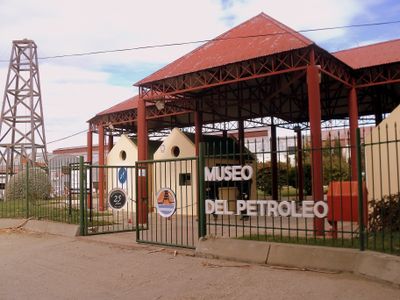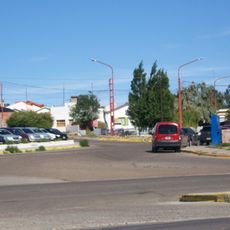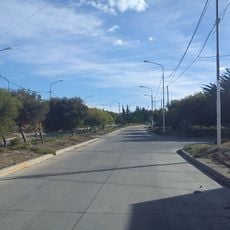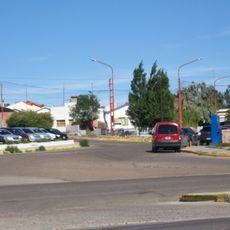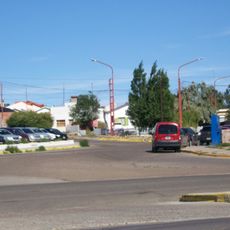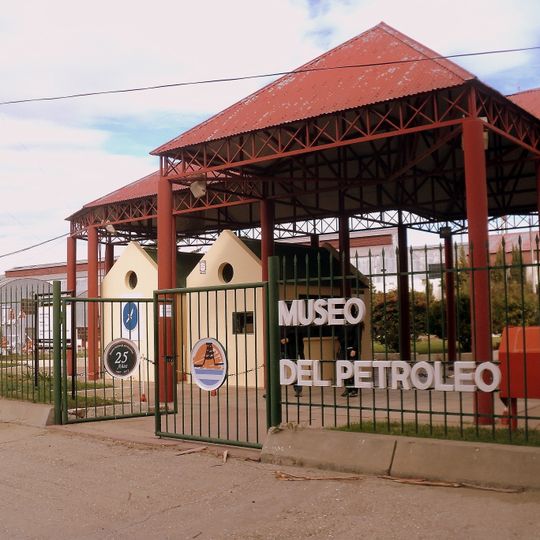
Museo Nacional del Petróleo, Petroleum museum in General Mosconi, Comodoro Rivadavia, Argentina.
The National Petroleum Museum is a site museum in the General Mosconi neighbourhood of Comodoro Rivadavia, built by YPF around the historic Well No. 2, which produced the first state oil gusher on 13 December 1907. Its grounds cover 10,000 m², with a 488 m² main building and a 9,512 m² outdoor machine park holding early 20th-century machinery, tools and Decauville railway equipment from the former Comodoro Rivadavia railway branch.
The museum is a site museum built by YPF around Well No. 2, where on 13 December 1907 the first state oil gusher erupted. YPF created the museum by Resolution No. 344 of 26 May 1987, and it opened on 13 December 1987. In 1993 it was transferred to the National University of Patagonia San Juan Bosco, and in 1997 Law No. 24.799 declared it a site of historical and cultural interest.
The museum reflects the central role that oil extraction played in shaping the region's identity and development. Displays show the working lives and daily routines of people who built the local petroleum industry.
The grounds are easy to navigate, with both indoor exhibits and outdoor areas to explore at your own pace. Visiting on a weekday allows you to see all sections of the museum without crowding.
Few museums worldwide focus entirely on the history of petroleum extraction, making this a rare destination for those interested in industrial heritage. The collection includes many items specifically preserved from the local oil operations, telling stories that few other places can offer.
The community of curious travelers
AroundUs brings together thousands of curated places, local tips, and hidden gems, enriched daily by 94,701 contributors worldwide.