Laguna del Carbón, Salt lake in Santa Cruz Province, Argentina
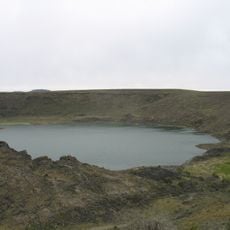
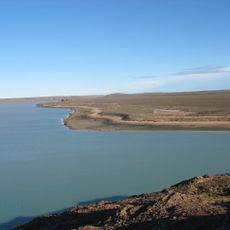
Laguna del Carbón lies in the Gran Bajo de San Julián, an endorheic basin between San Julián Bay and the Chico River in Santa Cruz Province. Its flat salt crust, pale tan and lobed, is bordered by darker brown terrain, with irregular green pools at its edges and below the central flat.
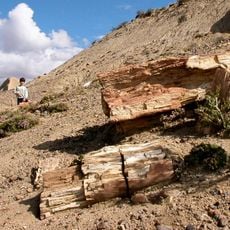
Laguna del Carbón lies in the Gran Bajo de San Julián, an endorheic basin between San Julián Bay and the Chico River. Its floor was measured at 105 metres below sea level, making it the lowest point of the Americas and the seventh-lowest on Earth. Dinosaur fossils have been found in the surrounding Patagonian area.
Its name, Spanish for "coal lagoon", refers to the dark colour of the salt crust and pools rather than to any mining. The site lies in the Gran Bajo de San Julián, an endorheic basin between San Julián Bay and the Chico River, and dinosaur fossils have been found in the surrounding Patagonian area.
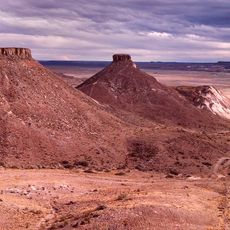
The lake lies in the Gran Bajo de San Julián, an endorheic basin between San Julián Bay and the Chico River. It is about 54 km from Puerto San Julián, and the sources give no services or marked access at the site, so bring everything you need. The terrain is flat salt crust and dark brown ground, with no shade.
Laguna del Carbón is the lowest point in both the Southern and Western hemispheres, at 105 metres below sea level, and the seventh-lowest depression on Earth. It lies in the endorheic Gran Bajo de San Julián, between San Julián Bay and the Chico River, about 54 kilometres from Puerto San Julián. Dinosaur fossils have been found in the surrounding area.
The community of curious travelers
AroundUs brings together thousands of curated places, local tips, and hidden gems, enriched daily by 92,781 contributors worldwide.