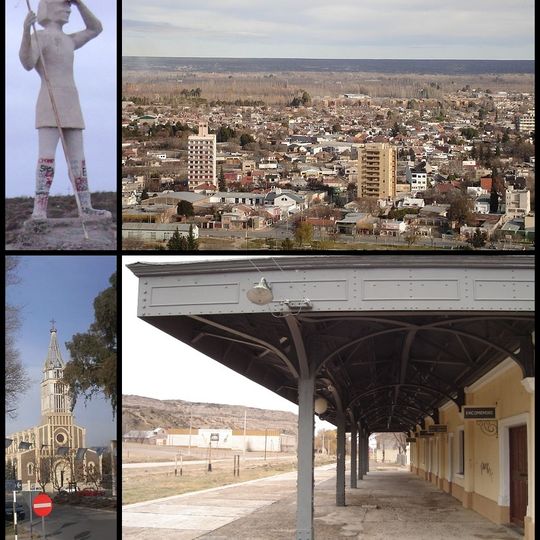
Villa Regina, human settlement
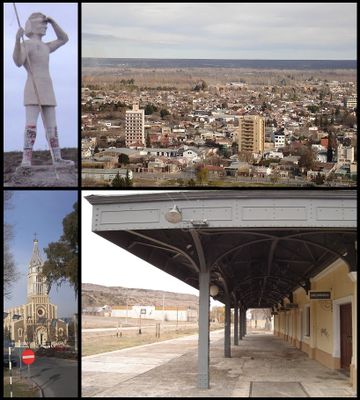
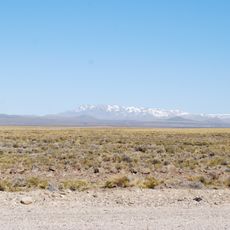
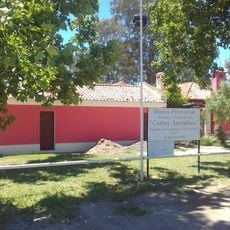
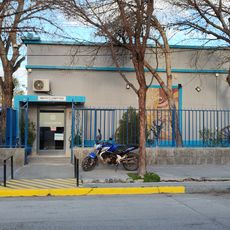
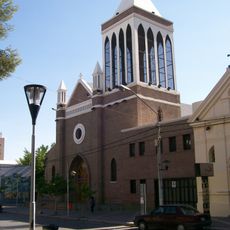
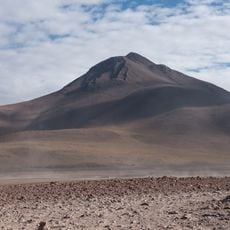
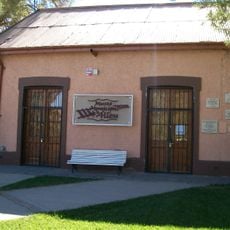
Villa Regina is a city in Rio Negro, Argentina, situated along the Rio Negro valley with streets containing both older and newer buildings. The landscape features cypress, eucalyptus, and willow trees, with numerous orchards producing apples, pears, and grapes spread throughout the area.
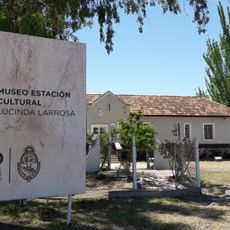
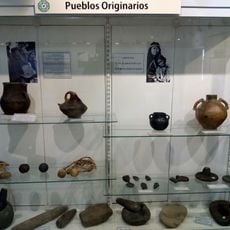
The city was founded in 1924 and initially named Colonia Regina de Alvear, after an Argentine president's wife, later becoming Villa Regina. Italian immigrants from northern Italy settled here, established a railway station, and planted vineyards and fruit orchards that shaped the local economy.
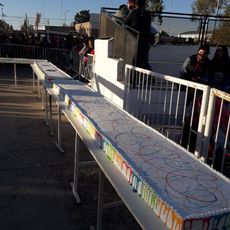
The city takes its name from an Argentine president's wife and reflects the Italian heritage of its residents through festivals and local traditions. Harvest celebrations and community gatherings show how farming and food production remain central to how people here live and connect with one another.
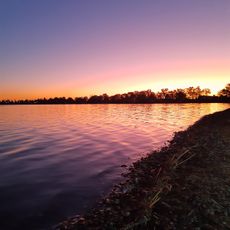
The city has small shops and markets where you can purchase local produce, along with easily accessible services such as hospitals and schools within the town center. The nearby Rio Negro offers camping, fishing, and hiking opportunities, particularly on Island 58 where families gather during summer months.
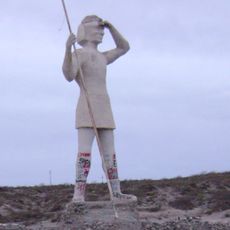
A monument called Indio Comahue stands on a hilltop overlooking the city and serves as its symbol. Many locals and visitors hike a trail called Trekking al Indio Comahue that leads to this landmark, offering panoramic views over the valley and surrounding areas.
The community of curious travelers
AroundUs brings together thousands of curated places, local tips, and hidden gems, enriched daily by 60,000 contributors worldwide.