La Plata Museum, Science museum in La Plata, Argentina.
The Museo de La Plata is a neoclassical building in the Paseo del Bosque, 135 metres long, with a rectangular plan ending in two hemicycles. Its projecting portico rests on six Corinthian columns above a wide staircase flanked by two smilodon sculptures by Víctor de Pol. Twelve busts of 18th- and 19th-century naturalists sit in niches beside the main door.
The museum was founded in 1884 by Francisco Pascasio Moreno and first opened to the public in 1888. It was the first institution of its kind in La Plata and played a key role in the city's growth as a center for learning and research.
The museum's name honours Francisco Pascasio Moreno, who founded it and served as lifelong director. Its second floor displays archaeological and ethnographic pieces from Argentina and Peru, tracing American cultures from the Aceramic period (12,800 BC) to the Inca Empire and the European arrival. An Egyptian room holds 300 items from the Aksha temple rescue, including 60 from the temple of Ramesses II.
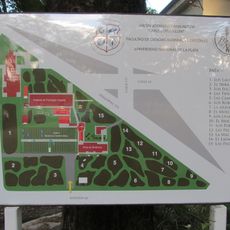
The museum stands in the Paseo del Bosque park, on a site designed by urbanist Charles Thays, and is reached on foot through the park. The building is 135 metres long, so allow time to cross the halls; the library holds 58,000 volumes and an amphitheatre opened in 1992.
The building's plan is a rectangle with two hemicycles at its ends, 135 metres along the main axis and 70 metres across. The six-column Corinthian portico is flanked by twelve busts of 18th- and 19th-century naturalists carved by the Venetian sculptor Víctor de Pol, set in niches between Tuscan pilasters, six on each side of the entrance door.
The community of curious travelers
AroundUs brings together thousands of curated places, local tips, and hidden gems, enriched daily by 93,598 contributors worldwide.