La Plata Astronomical Observatory, Astronomical observatory in La Plata, Argentina
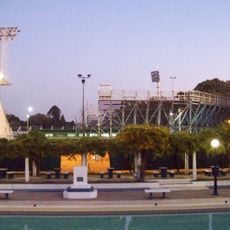
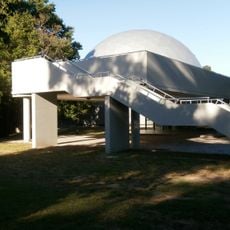
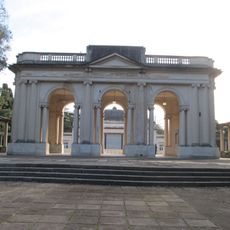
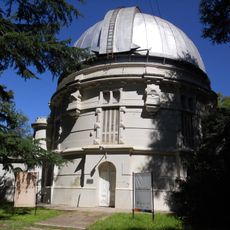
La Plata Astronomical Observatory is a research complex in La Plata, Argentina, with multiple domes and pavilions housing telescopes and scientific instruments. Its Museum of Astronomy and Geophysics, created in July 1997, displays instruments acquired by the observatory in the early 20th century. The main telescope is the Gran Ecuatorial Gautier.
Founded in 1883 during the creation of La Plata city, the observatory began operations under French director Francisco Beuf with a focus on positional astronomy. The meridian circle building followed in 1889 as one of the era's most important scientific instruments.
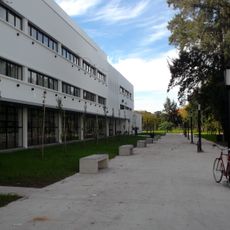
The observatory functions as part of the National University of La Plata, serving as a teaching and research hub for astronomy and geophysics. Students and researchers work here daily on projects that advance understanding of space and Earth sciences.
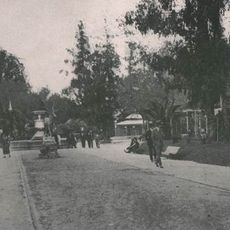
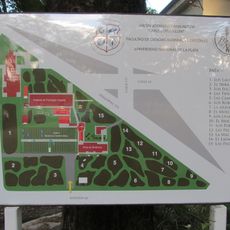
Visitors can attend regular stargazing sessions and explore the Museum of Astronomy and Geophysics featuring historical instruments. The complex sits within Paseo del Bosque Park, which is easily navigable on foot and offers shaded areas and rest spots throughout the grounds.
The asteroid (1029) La Plata was discovered from this observatory by J. Hartmann on 28 April 1924 and named after it, though Lutz D. Schmadel's Dictionary states the name refers to the city. Between 1950 and 1962 the Minor Planet Center credited the site with five asteroid discoveries.
The community of curious travelers
AroundUs brings together thousands of curated places, local tips, and hidden gems, enriched daily by 92,692 contributors worldwide.