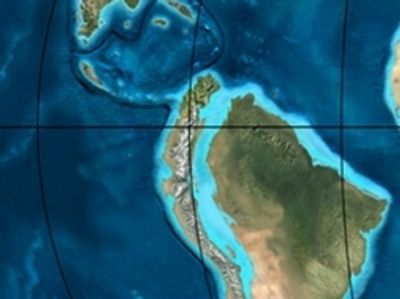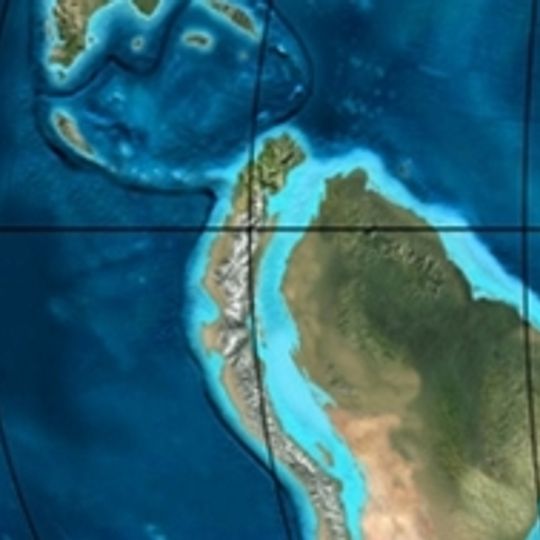
Santa Lucía Formation, Geological formation near Cochabamba, Bolivia.
Santa Lucía Formation is a geological sequence of sedimentary layers near Cochabamba composed of shale, marl, and siltstone deposits. These strata are roughly 381 meters thick and date from the Paleocene period.
This formation developed during the transition from the Cretaceous to the Paleogene period, spanning the Maastrichtian and Danian stages. This timeframe marks when dinosaurs disappeared and early mammals began to flourish in South America.
Scientists from multiple countries conduct research at this formation to study the evolution of early mammals following the extinction of dinosaurs.
Access to the formation is restricted and visitors may need permission from local authorities to explore it fully. Proper footwear and caution are important given the steep terrain and unstable rock faces.
This site holds some of the oldest known mammal fossils from South America following the dinosaur extinction. Specimens found here reveal how early mammals adapted and survived in the period after dinosaurs vanished.
The community of curious travelers
AroundUs brings together thousands of curated places, local tips, and hidden gems, enriched daily by 92,231 contributors worldwide.