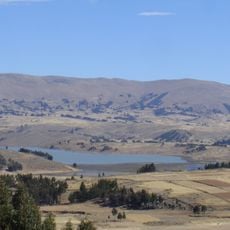
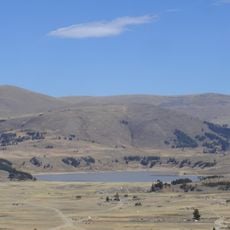
Incallajta, Inca archaeological site in Carrasco Province, Bolivia
Incallajta is an Inca site of about 80 hectares on a hill cone between two ravines in Pocona Municipality, Carrasco Province. Its core is a group of plazas and courtyards enclosed by walls, with the Kallanka, a roofed hall 78 by 25 metres and 12 metres high, dominating the centre. Its gable wall has ten niches and four windows, and the buildings use trapezoidal forms and stone covered with clay.
The Inca built this complex in the second half of the 15th century under Topa Inca Yupanqui as an administrative outpost. It served to consolidate and manage their control over the southern regions of their expanding empire.
The name Incallajta comes from Quechua Inka Llaqta, meaning "Inca town". The site lies between two ravines at 2,950 m and was the most important Inca llaqta of Antisuyu. Visitors can see the trapezoidal doorways and niches that recur throughout the ruins, and the zigzag wall north of the complex that marked and protected the entrance.
Incallajta lies about 130 km east of Cochabamba, in Pocona Municipality, at 2,950 m between two quebradas. Access is by road from Cochabamba; the final stretch is a dirt track, and a double Inca road from Vacas approaches the site on foot. The ground is uneven and the weather changeable, so bring sturdy shoes and layers.
The zigzag wall immediately north of the site, with a single palisaded entrance, was built to mark and protect the complex; the final stretch of the double Inca road from Vacas leads to it. The road's two parallel segments, about 30 m apart and up to 4 m wide, pass control points such as Mamahuasi K'asa and Incahuayco before reaching this entrance.
The community of curious travelers
AroundUs brings together thousands of curated places, local tips, and hidden gems, enriched daily by 92,821 contributors worldwide.