Ypacaraí Lake, Recreational lake in Central Paraguay.
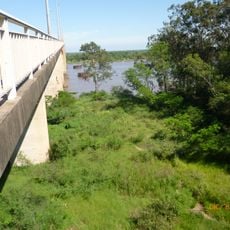
Ypacaraí Lake covers about 90 square kilometres in the Asunción-Sapucai-Villarrica tectonic depression, measuring 24 km north to south and 5 to 6 km east to west, with an average depth of roughly 1.72 metres. It lies between the Central and Cordillera departments, about 37 km from Asunción, and drains northwest through the Salado River into the Paraguay River. Areguá, Ypacaraí and San Bernardino stand on its shores, with low wooded hills behind them.
The lake was originally called Tapycua; the name Ypacaraí, meaning "holy lake", is tied to the legend that Luis de Bolaños blessed its waters around 1600. In 2013 environmental studies found high levels of the cyanobacterium Cylindrospermopsis raciborskii, and Areguá's municipal beach was closed to the public. A Ministry of Public Health resolution of 28 October 2014 (No. 2035) stated the bacteria levels were below those harmful to human health.
The lake inspired the guarania "Recuerdos de Ypacaraí", written by Demetrio Ortiz with lyrics by Zulema de Mirkin and recorded by singers such as Julio Iglesias. In Ypacaraí, the Festival del Lago has been held every September since 1971 with national and foreign artists. San Bernardino, an old Swiss colony, keeps pubs, discos and social clubs busy in summer, and its bakeries sell bollos filled with guava jam, cream or dulce de leche.
Regular bus services operate daily between Asunción's main terminal and surrounding towns of San Bernardino, Areguá, and Ypacaraí. Summer months from December through February offer warm weather for water sports activities but may attract many visitors. Restaurants and lodging concentrate especially in San Bernardino, while smaller towns provide quieter alternatives. Sunscreen and insect repellent are recommended due to strong sun exposure and mosquitoes near the shoreline.
The lake lies in the western part of the Asunción-Sapucai-Villarrica graben, a tectonic depression from the Mesozoic Era. Its average depth is about 1.72 metres, not three. Because of toxic cyanobacteria, livestock farms, deforestation and land development, it is considered Paraguay's most polluted lake, and swimming is not advised.
The community of curious travelers
AroundUs brings together thousands of curated places, local tips, and hidden gems, enriched daily by 92,784 contributors worldwide.