Cantareira State Park, State park in São Paulo, Brazil
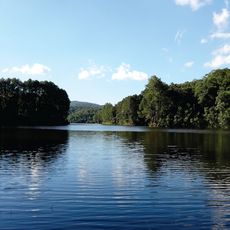
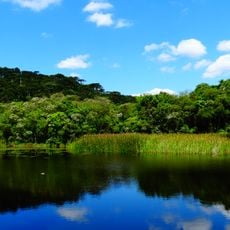
Cantareira State Park protects 7,916.52 hectares of Atlantic Forest across São Paulo, Guarulhos, Mairiporã and Caieiras. Its four visitor centers—Pedra Grande, Engordador, Águas Claras and Cabuçu—each have separate trails; Pedra Grande's lookout sits at 1,010 metres above sea level. The forest is dense montane rainforest in middle-stage regeneration, with 678 plant species recorded.
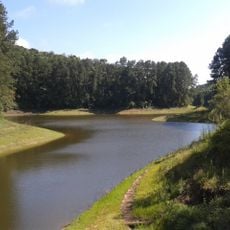
The Cantareira Company was founded in 1878 to supply water to a city expected to reach 60,000 inhabitants. After the 1892 census showed 120,000 residents, the state cancelled the company's contract, bought its mountain properties and expanded the protected area to build dams including Cuca, Olaria and Engordador. State law 6.884 of 1962 transformed the reserve into Cantareira State Park, confirmed by decree 41,626 of 30 January 1963.
The name Cantareira comes from the cantareiras, shelves where tropeiros stored water jars at a stop on the São Paulo trade route in the 16th and 17th centuries. The Engordador centre recalls a late-17th-century farm where cattle were fattened. Cabuçu may mean "large wasp" in Tupi-Guarani, or refer to the Miconia cabussu tree common there.
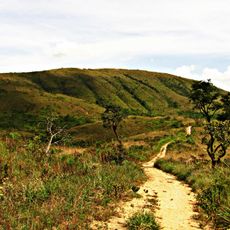
The park's four sections vary in terrain difficulty and require different levels of fitness depending on the trails chosen in each area. Visitors should plan accordingly based on which sections interest them most, as each requires separate access points.
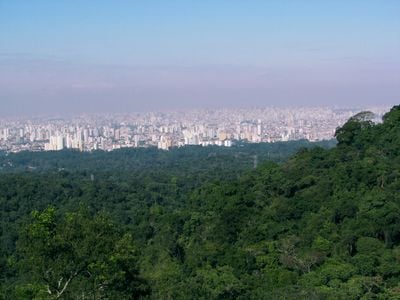
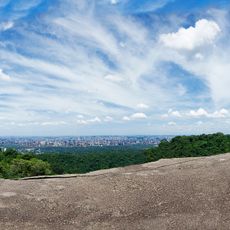
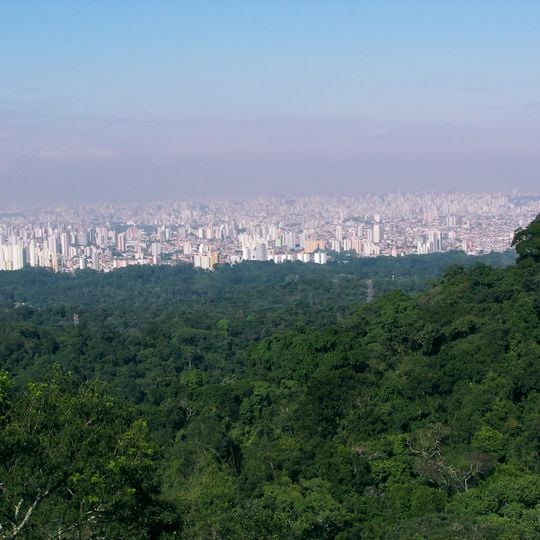
The Pedra Grande lookout, at 1,010 metres, is the park's most visited point and the first opened to the public, in 1989. From there the Atlantic Forest canopy meets the skyline of São Paulo, whose centre lies close by. The contrast between forest and city is the reason most visitors come.
The community of curious travelers
AroundUs brings together thousands of curated places, local tips, and hidden gems, enriched daily by 92,783 contributors worldwide.