Sistema Cantareira, Water supply system in São Paulo, Brazil
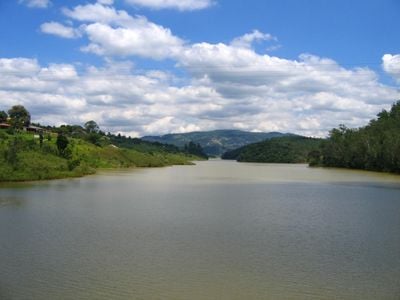
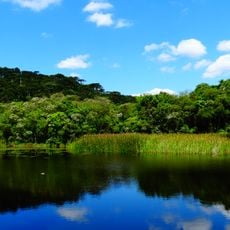
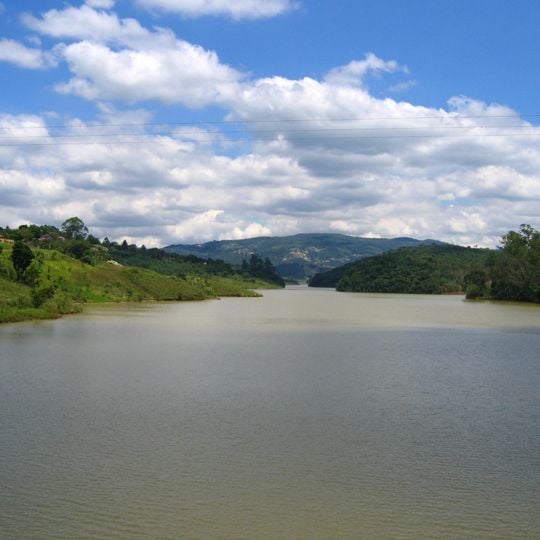
Sistema Cantareira is a water supply system of six interconnected reservoirs, not five, built from 1972 to 1981 in the Piracicaba and Juqueri river basins north of São Paulo. Its dams hold brownish-green water in a wide basin bordered by sloping land; bare earth shorelines meet dense green vegetation, and rounded, tree-covered hills recede behind the water. A canal and 48 km of tunnels link the reservoirs.
Planning began around 1960, when São Paulo's government sought new supply for a metropolitan population of 4.8 million by damming the headwaters of the Piracicaba basin. Work started in 1966 on the Juqueri River dams, Paiva Castro and Águas Claras, followed by Cachoeira and Atibainha; Jaguari and Jacareí were added from 1976. In March 2018, after the 2014–2017 drought, about 5,000 litres per second began arriving from the Paraíba do Sul basin.
The name Cantareira comes from the Serra da Cantareira, the ridge the water must cross. The Santa Inês pumping station lifts water through tunnels 1 and 4 to the Águas Claras reservoir at 860 metres, and that reservoir can keep the system running for up to three hours if pumping stops. Sabesp's 2014 discount programme gave customers who cut use by 20% a 30% reduction on their bill.
The reservoirs sit in several municipalities north of São Paulo, including Bragança Paulista and Piracaia. Visitors can reach some areas along the waterfront roads, while other sections remain restricted for safety and protection reasons.
Water flows through underground tunnels between two river basins, connecting the Piracicaba watershed with the Alto Tietê drainage area. This transfer allows water to move from less populated regions into the densely populated metropolis.
The community of curious travelers
AroundUs brings together thousands of curated places, local tips, and hidden gems, enriched daily by 94,048 contributors worldwide.