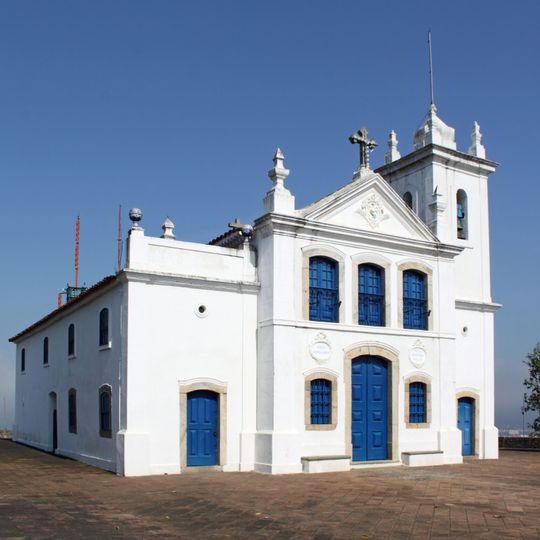
Igreja de Nossa Senhora da Pena, Colonial church in Jacarepaguá, Rio de Janeiro, Brazil
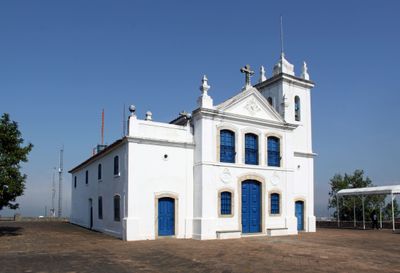
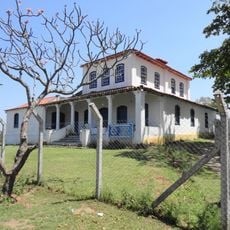
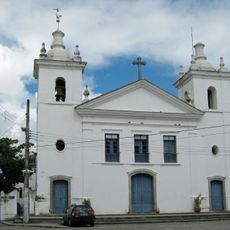
Igreja de Nossa Senhora da Pena is a colonial church building with classical features including a pediment, bell tower, and a single nave with side corridors. Inside, ceramic tiles depict scenes from the Virgin Mary's life, while the central nave illustrates episodes from Christ's journey.
The church was built between 1633 and 1642 on top of Morro da Penna (Pedra do Galo), 160 metres above sea level, in the Freguesia neighbourhood of Jacarepaguá. It is the second-oldest sanctuary in Jacarepaguá, after the 1625 Igreja de São Gonçalo do Amarante at Engenho do Camorim. Access long depended on a steep, narrow cobbled slope, replaced in August 2014 by an inclined lift.
The church is the main tourist point of Freguesia, a neighbourhood of Jacarepaguá, and its name honours Our Lady of the Penna, after the hilltop where it stands. The 1633-1642 building is the second-oldest sanctuary in Jacarepaguá, after the 1625 Igreja de São Gonçalo do Amarante at Engenho do Camorim. Since August 2014 an inclined lift has carried visitors up the steep stone-paved slope.
The church stands at the top of Morro da Penna (Pedra do Galo), 160 m high, reached by a steep, narrow cobbled slope. Since August 2014 an inclined lift carries 18 people per trip over 110 m in 4 minutes, and a second elevator for 8 people links the upper station to the chapel courtyard.
The sacristy holds a portrait of Dom Pedro II, revealing a connection between this church and the imperial family. The space also preserves votive offerings left by worshippers across two centuries as signs of answered prayers.
The community of curious travelers
AroundUs brings together thousands of curated places, local tips, and hidden gems, enriched daily by 94,191 contributors worldwide.