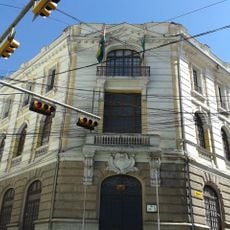
Basílica María Auxiliadora, church building in La Paz, Bolivia
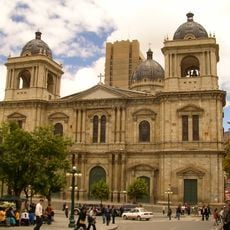
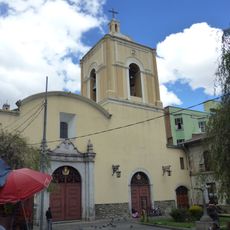
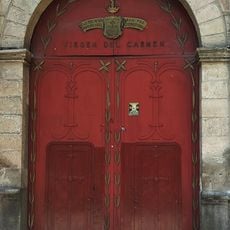
Basílica María Auxiliadora is a three-nave Catholic basilica on Avenida 16 de Julio, built 1950–1969 under Italian engineer Vittorio Aloisio. Its Art Deco design, in the modernist current, drops curved lines and reworks Gothic forms with straight ones; the cross-shaped plan has three wooden portals under angular arches and a bell tower of three decreasing bodies. Italian polychrome marble forms the main and side altars and the floors, lit by stained glass in the choir and clerestory.
The construction project began in 1946, during the ceremony marking the 50th anniversary of the founding of the Salesian work in La Paz. The Italian engineer Vittorio Aloisio directed the building work from 1950 to 1969. On 24 September 2000, Pope John Paul II raised the church to the rank of minor basilica.
The church is dedicated to Mary Help of Christians, the Salesian devotion, and its interior holds images of the Virgin of Cotoca, Mary Help of Christians and John the Baptist. Salesian institutions of Don Bosco adjoin the basilica, and Pope John Paul II raised it to minor basilica rank on 24 September 2000.
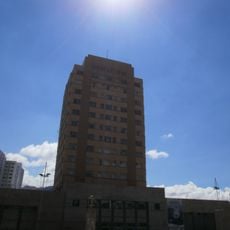
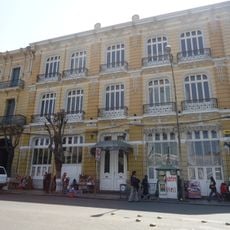
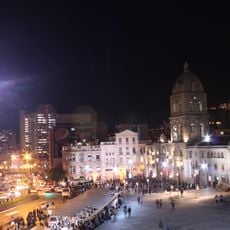
The building sits on Avenida 16 de Julio at number 1853, positioned next to government buildings and Plaza San Francisco in a central location. Visitors can easily walk through the neighborhood and reach nearby public squares and other points of interest.
The church follows strict Art Deco principles by eliminating all curved lines and using only angular geometry throughout its design. This unusual interpretation of Art Deco style with exclusively straight and angular elements sets it apart from other religious buildings of the same period.
The community of curious travelers
AroundUs brings together thousands of curated places, local tips, and hidden gems, enriched daily by 94,181 contributors worldwide.