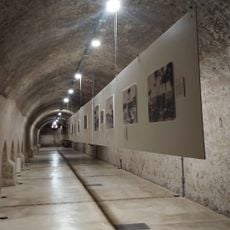
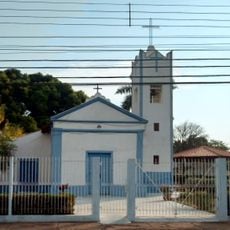
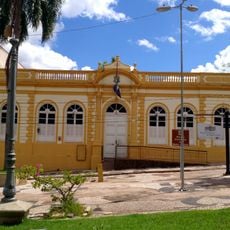
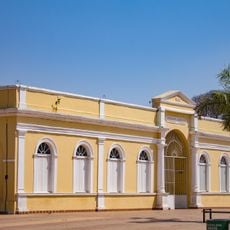
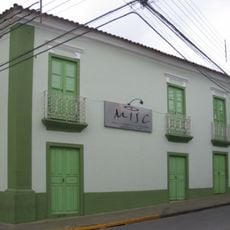
Museu Rondon, Ethnology and archaeology museum at Federal University of Mato Grosso, Cuiabá, Brazil.
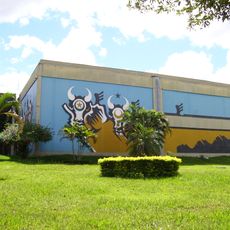
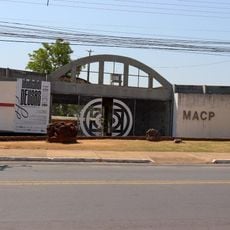
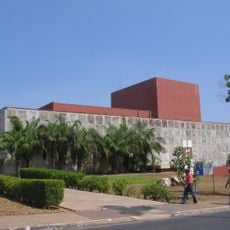
The Museu Rondon de Etnologia e Arqueologia is a university museum of the Federal University of Mato Grosso, created in 1972 and opened on 8 January 1973. It occupies a 600 m² building in the Parque Aquático, beside the university swimming pool, in what was the old university restaurant. Its collection of material culture came largely from indigenists Orlando Villas Boas, João Américo Peret and Apoena Meireles. A Kurâ-Bakairi house was built beside it in 2008.
The Museu Rondon was created by Resolution No. CD 36/72 of June 30, 1972, and inaugurated on January 8, 1973, with input from indigenists Orlando Villas Boas, João Américo Peret and Apoena Meireles. A 1982 resolution replaced the director and division chief posts with a single management role. In 2007 the ASAMUR friends' association funded the exhibition room's renovation, reopened in April 2008.
The collection displays items from the daily life of different indigenous peoples in the region, from clothing to musical instruments that reflect their distinct traditions. Visitors can see how these objects fit into community life and showcase their craftsmanship.
The museum is located behind the university swimming pool and is open Monday through Friday with free admission. Guided tours are available and help visitors understand the collection better.
The museum occupies part of a 600 m² building that once served as the university restaurant, beside the swimming pool in the Parque Aquático. In 2008, with funding from the federal government, a Kurâ-Bakairi house was built on the site with the participation of the Kurâ-Bakairi from Pakuera village in Paranatinga.
The community of curious travelers
AroundUs brings together thousands of curated places, local tips, and hidden gems, enriched daily by 92,813 contributors worldwide.