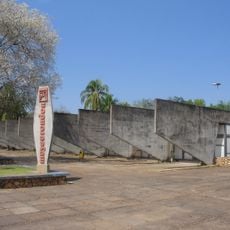
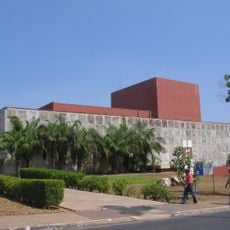
Palácio Paiaguás, Palace and state government headquarters in Centro Político Administrativo, Cuiabá, Brazil.
Palácio Paiaguás is the seat of Mato Grosso state government and sits within an administrative center outside the city's downtown area. The building houses both the official working offices of government officials and the governor's residence under a single structure.
Construction began in the early 1970s under state leadership and took roughly two years to complete. The building marked a shift toward developing more modern administrative infrastructure for the state.
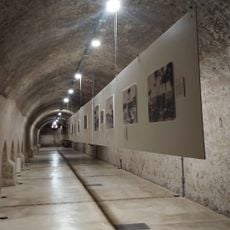
The palace is named after the Paiaguás, an indigenous canoeing people who lived along the lower Paraguay River. The name was chosen for the seat of government inaugurated in 1975. The building also holds a historical and artistic collection open to public visits.
The palace sits several kilometers from downtown and is best reached by car or taxi from central areas. The grounds offer space to walk around, and public access to interior spaces depends on special permission or scheduled tours.
The exterior mural Bovinocultura was made by Humberto Espíndola, who lived in Cuiabá and worked at the Federal University of Mato Grosso when he created it. It uses marble, granite, concrete and paint in blue, yellow, white and black, and sits on the inner plaza and the side of the building. In October 2014 it was listed as heritage of Mato Grosso together with the palace, on a proposal by Pedro Nadaf.
The community of curious travelers
AroundUs brings together thousands of curated places, local tips, and hidden gems, enriched daily by 92,883 contributors worldwide.