Cláudio Santoro National Theater, Modern theater in Federal Cultural Sector, Brasília, Brazil
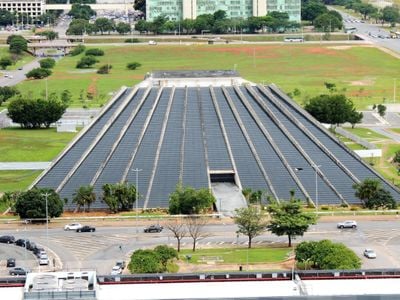
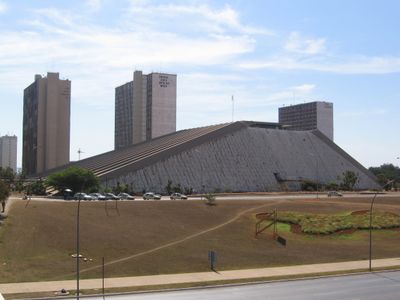
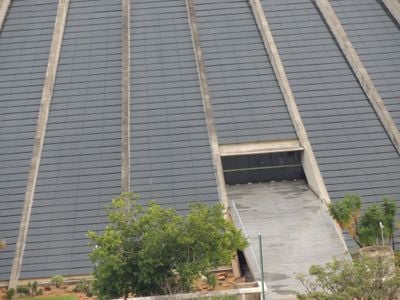
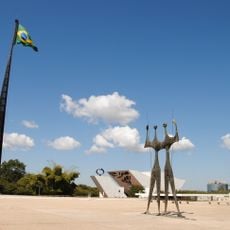
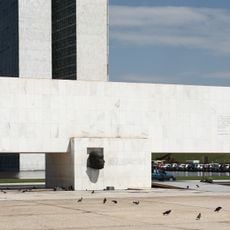
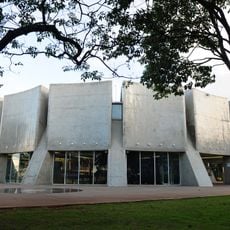
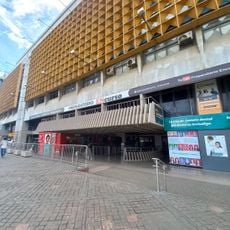
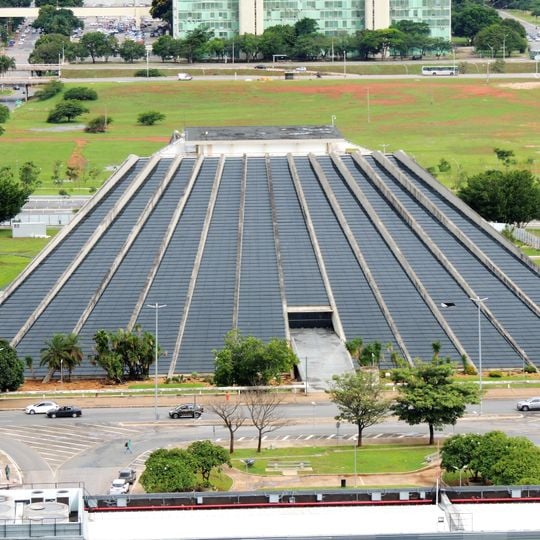
The Cláudio Santoro National Theater is a truncated pyramid of reinforced concrete in Brasília's Setor Cultural Norte, 46 meters tall (24.5 above ground, 19 below) and 136 meters along its side. Its sloped roof is clad in parallel dark gray panels, and Athos Bulcão's 1966 concrete-block panel covers the lateral façades, measuring 125 meters at the base and 27 meters high.
The project began in 1960 as part of Brasília's ambitious cultural development and grew over decades. Various halls were completed in phases, with full opening occurring in 1981, establishing it as a cultural anchor for the city.
The theater was renamed in 1989 for conductor and composer Cláudio Santoro, who founded its orchestra in 1979 and led it until his death. Its three halls are named Martins Pena, Villa-Lobos and Alberto Nepomuceno. The Martins Pena hall reopened on 20 December 2024 with a Chitãozinho & Xororó concert for guests, and the public returned the next day for a show by Almir Sater.
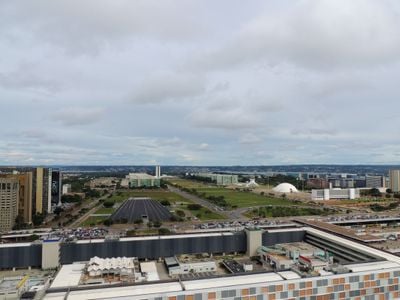
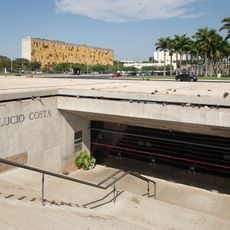
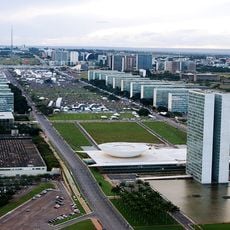
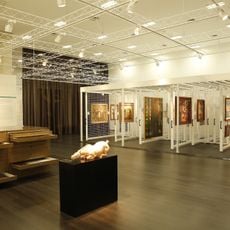
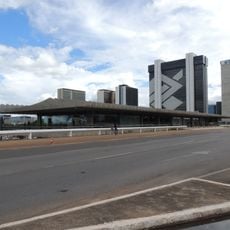
The theater stands on the Via N2 of the Monumental Axis in the North Cultural Sector, Setor Cultural Norte, in Brasília's North Wing. The main pyramid holds the Villa-Lobos and Alberto Nepomuceno halls, while the semi-buried annex holds offices, rehearsal rooms and galleries. After reopening in December 2024 only the Martins Pena hall and some areas receive the public; other rooms remain closed during restoration.
The building drew inspiration from pre-Columbian architecture, reflected in its geometric form and setting it apart from typical modern theater structures. This historical reference gives the structure cultural depth beyond its function as a performance venue.
The community of curious travelers
AroundUs brings together thousands of curated places, local tips, and hidden gems, enriched daily by 94,371 contributors worldwide.