Cathedral of Brasília
Cathedral of Brasília, Modern cathedral in Brasília, Brazil
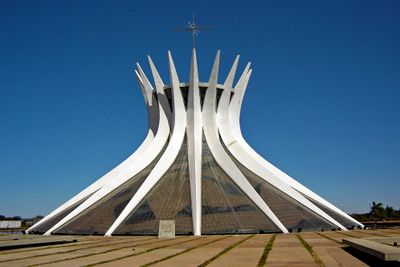
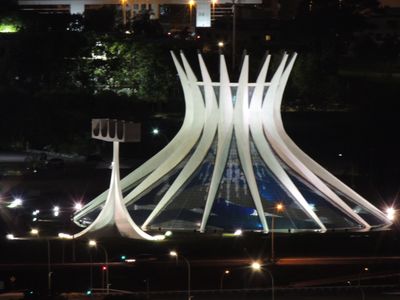
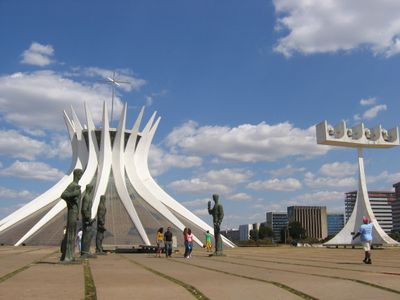
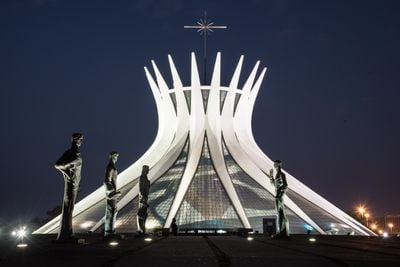
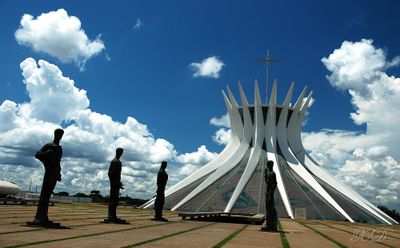
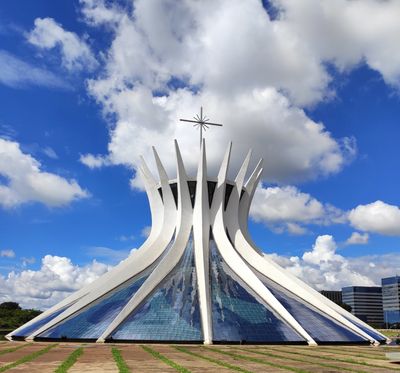
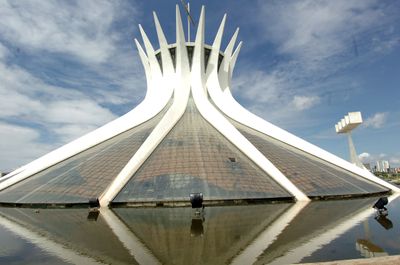
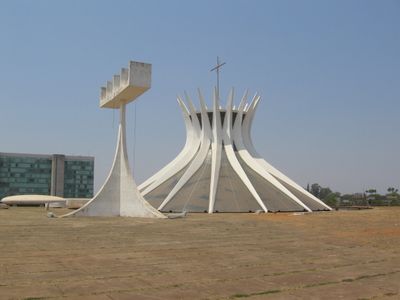
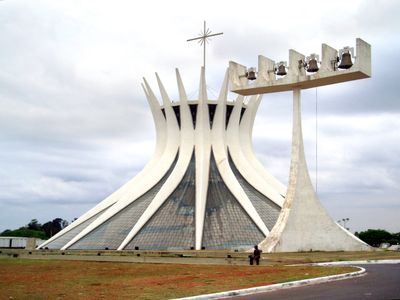
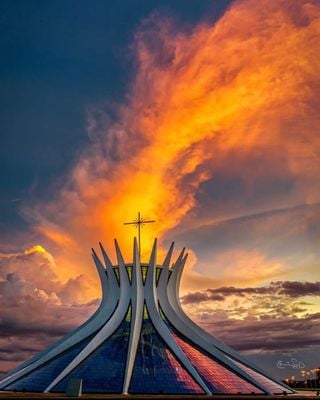
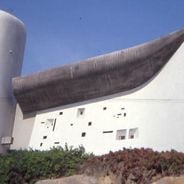
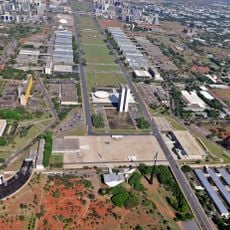
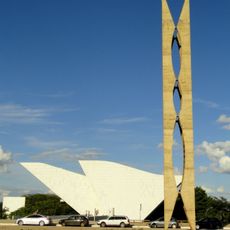
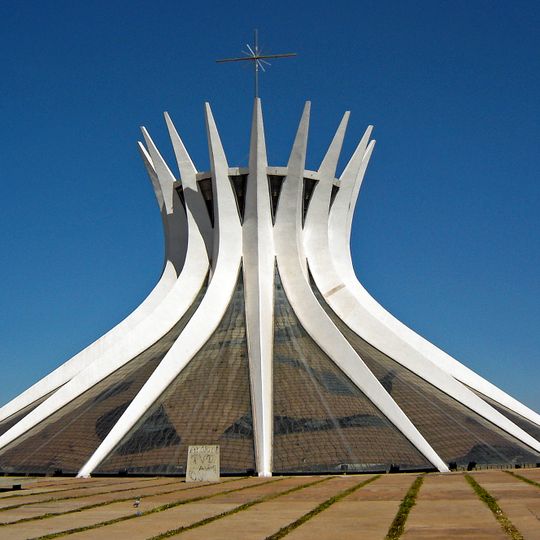
The Cathedral features sixteen concrete columns weighing 90 tons each, forming a hyperboloid structure that extends upward in a crown-like formation.
Construction commenced in September 1958 under President Juscelino Kubitschek's administration, but the cathedral opened only in May 1970 due to political changes.
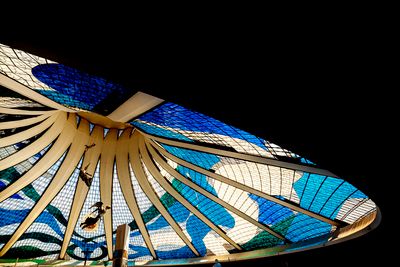
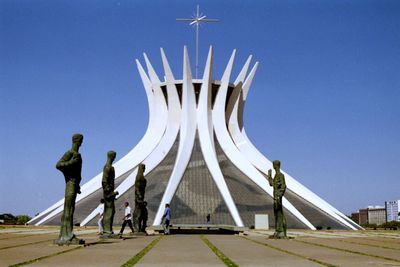
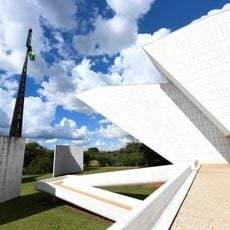
The cathedral displays bronze sculptures of the Four Evangelists at its entrance and contains three suspended angel sculptures created by Alfredo Ceschiatti.
The cathedral maintains space for 4,000 visitors and includes a 20-meter bell tower containing four bells donated by Spanish residents of Brazil.
Natural light enters through triangular stained glass panels designed by Marianne Peretti, reaching heights of 98 feet within the structure.
Location: Brasília
Inception: May 31, 1970
Architects: Oscar Niemeyer
Official opening: May 31, 1970
Architectural style: modern architecture
Capacity: 4000
Accessibility: Wheelchair accessible
Made from material: concrete
Phone: +556132244073
Website: http://catedral.org.br
GPS coordinates: -15.79833,-47.87556
Latest update: May 28, 2025 18:37
This collection presents significant architectural works from different periods and continents. From medieval cathedrals to contemporary skyscrapers, the selection documents the technical and aesthetic development of building design. The listed buildings were created by influential architects and have shaped the evolution of modern architecture. The list includes religious structures such as Gothic churches and monasteries, public facilities like museums and concert halls, and residential buildings that established new construction standards. Each building demonstrates particular structural solutions or stylistic features that contribute to understanding architectural history. The selection offers insights into various building styles, materials and construction methods.
Brutalist architecture emerged in the decades following World War II, producing buildings that challenged conventional design through their honest expression of materials and function. From Le Corbusier's Unité d'Habitation in Marseille to Louis Kahn's National Assembly in Dhaka, these structures define a global movement that prioritized raw concrete, bold geometric forms and exposed construction elements. The style reached across continents, shaping university libraries in Chicago, government buildings in Boston and Chandigarh, residential towers in London, and cultural centers in São Paulo. Each building reflects the architectural philosophy of its time, when architects sought to create functional spaces through direct expression of structure and material. This collection documents examples from Europe, Asia, North and South America, representing the full range of building types that defined the movement. You'll find administrative complexes that house parliaments and municipal offices, educational facilities serving major universities, residential towers providing urban housing, and cultural institutions including museums and theaters. The structures share common characteristics—concrete left exposed to show its texture and formwork patterns, geometric compositions that emphasize mass and volume, and architectural elements that reveal rather than conceal how buildings stand and function. These sites offer insight into a period when architects reimagined how modern cities could be built and how public spaces could serve their communities.
Concrete churches from different countries show the architectural evolution of the 20th century. These structures combine geometric forms with modernist designs and use light as a design element. The buildings demonstrate the technical capabilities of concrete as a construction material for religious spaces.
Oscar Niemeyer shaped Brazilian modernism with his concrete constructions featuring bold geometric forms. In Brasília, the capital he helped design, the Cathedral stands out with its sixteen columns rising 40 meters (131 feet) high, while the National Congress combines two 28-story towers with opposing domes, one facing upwards for the House of Representatives, the other downwards for the Senate. The Niterói Contemporary Art Museum, with its circular shape resting on a central support, overlooks the bay of Rio de Janeiro. His work extends beyond Brazil. In Paris, the headquarters of the French Communist Party reflects his architectural vision, as does the Asturian Cultural Center in Spain. These international projects extend the architect’s influence beyond his homeland. In São Paulo, the Copan Building showcases its curved S-shaped facade stretching 115 meters (377 feet), containing 1,160 apartments across 32 floors. These works embody a modernist approach favoring concrete structures, geometric volumes, and natural light integration.
Palácio do Planalto
1.6 km
Pilot Plan of Brasília
918 m
Praça dos Três Poderes
1.5 km
Tancredo Neves Pantheon of Fatherland and Freedom
1.7 km
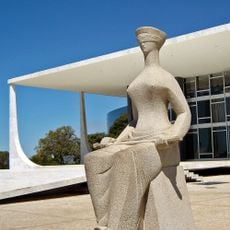
A Justiça
1.5 km
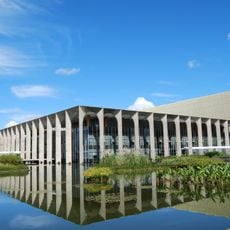
Itamaraty Palace
963 m
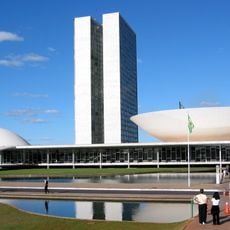
National Congress Palace
1.2 km
Os Candangos
1.6 km
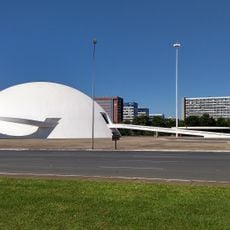
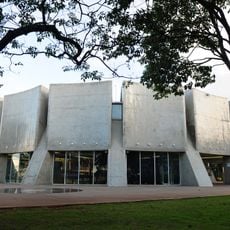
"Honestino Guimarães" National Museum
298 m
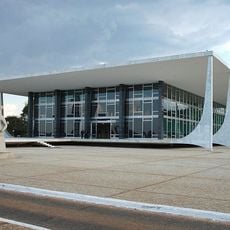
Supremo Tribunal Federal building
1.5 km
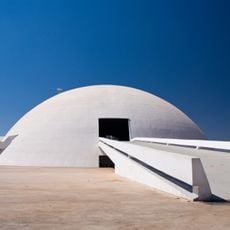
MUSEU Nacional da República
299 m
Cláudio Santoro National Theater
862 m
Palace of Justice
1 km
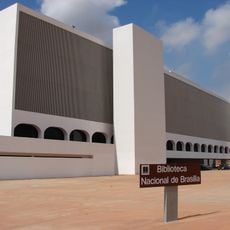
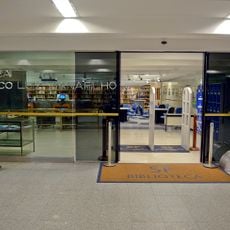
Biblioteca Nacional de Brasília
525 m
Cultural Complex of the Republic
433 m
Caixa Cultural
1.1 km
Ponte Costa e Silva
2.7 km
Pombal (Brasília)
1.6 km
Museu da Cidade
1.5 km
Planetário de Brasília
843 m
Espaço Lúcio Costa
1.5 km
Esplanada dos ministérios
627 m
Library Acadêmico Luiz Viana Filho
1.3 km
Casa de Chá (Praça dos Três Poderes)
1.6 km
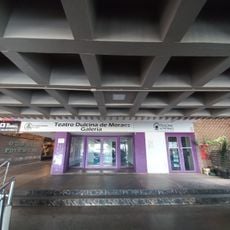
Teatro Dulcina de Moraes
1 km
Museu de Valores do Banco Central
1.1 km
Superior Tribunal de Justiça building
1.4 km
Edifício do Touring Club do Brasil
789 mReviews
Visited this place? Tap the stars to rate it and share your experience / photos with the community! Try now! You can cancel it anytime.
Discover hidden gems everywhere you go!
From secret cafés to breathtaking viewpoints, skip the crowded tourist spots and find places that match your style. Our app makes it easy with voice search, smart filtering, route optimization, and insider tips from travelers worldwide. Download now for the complete mobile experience.
A unique approach to discovering new places❞
— Le Figaro
All the places worth exploring❞
— France Info
A tailor-made excursion in just a few clicks❞
— 20 Minutes