Thaba Bosiu, Sandstone fortress and burial ground in Maseru District, Lesotho.
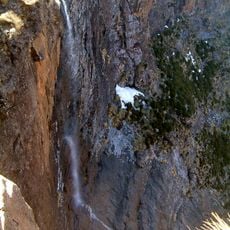
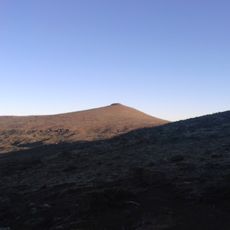
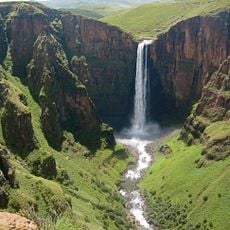
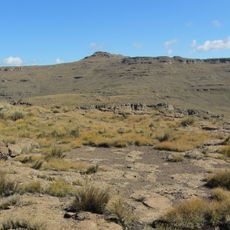
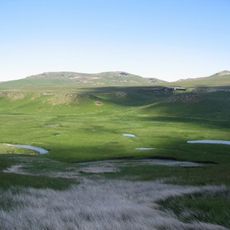
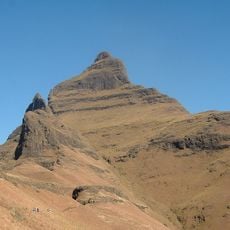
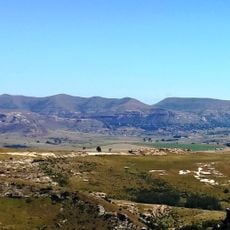
Thaba Bosiu is a flat-topped sandstone plateau rising about 106 metres above the Phuthiatsana valley, 24 km east of Maseru. Its summit is ringed by perpendicular cliffs averaging 12 metres and measures roughly 3 km north-south by 2 km east-west. Eight springs and six passes, the main one Khubelu pass, lie on the plateau, where stone house walls and burial cairns remain.
In the 19th century, King Moshoeshoe I established this location as the capital of the Basotho nation and used its natural defenses to repel numerous attackers. The fortress became a symbol of the people's sovereignty.
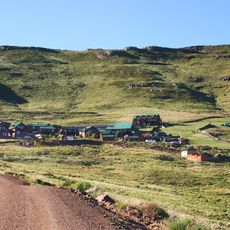
The name Thaba Bosiu means "Mountain at Night", given because Moshoeshoe I and his followers arrived there after dark in July 1824. Many Basotho hold that dirt taken from the plateau returns to it overnight. Moshoeshoe I was buried on the summit in 1870, and Moshoeshoe II in 1996, when tens of thousands came to the village for the funeral.
Visitors can take several hiking paths to reach the summit and explore the site on foot. The driest seasons offer the easiest access since wet conditions make the rocky surfaces slippery.
Moshoeshoe I spread word that the mountain grew larger at night to frighten his enemies, and many Basotho still hold that dirt taken from Thaba Bosiu returns to the mountain by morning. The plateau was the only part of the territory never stormed by the Boers. Moshoeshoe I was buried on the summit in 1870, and Moshoeshoe II in 1996.
The community of curious travelers
AroundUs brings together thousands of curated places, local tips, and hidden gems, enriched daily by 92,885 contributors worldwide.