Lake Kariba, Reservoir on Zambezi River, Zambia and Zimbabwe.
Lake Kariba is a reservoir on the Zambezi River between Zambia and Zimbabwe, over 223 km long and up to 40 km wide. It covers 5,580 km², has a mean depth of 29 m and a maximum depth of 97 m, and holds 185 km³, the largest volume of any artificial lake. It was filled between 1958 and 1963 after the Kariba Dam was completed at its northeastern end.
The construction of Kariba Dam between 1955 and 1959 created this reservoir and required relocating 57,000 Tonga people from their ancestral lands. The flooding of the valley permanently changed the landscape and formed a new border between the two countries.
The kapenta, a sardine-like fish brought from Lake Tanganyika, supports a commercial fishery on the lake. The floating fern Salvinia molesta became known as "Kariba weed" after it colonised the reservoir. The Zimbabwean shore lies within a recreational park of the Zimbabwe Parks and Wildlife Estate.
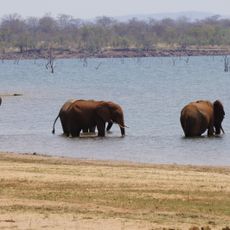
The best views come from the dam itself or from boat trips along the many bays and islands scattered across the water. Visitors should come early morning or late afternoon when elephants and other animals approach the shore to drink.
The reservoir holds 185 cubic kilometres, four times the volume of the Three Gorges reservoir in China. Its mass of water is thought to have triggered induced seismicity in this active region, with more than 20 earthquakes above magnitude 5 recorded. Among its islands are Chete, Fothergill and Antelope Island.
The community of curious travelers
AroundUs brings together thousands of curated places, local tips, and hidden gems, enriched daily by 92,785 contributors worldwide.