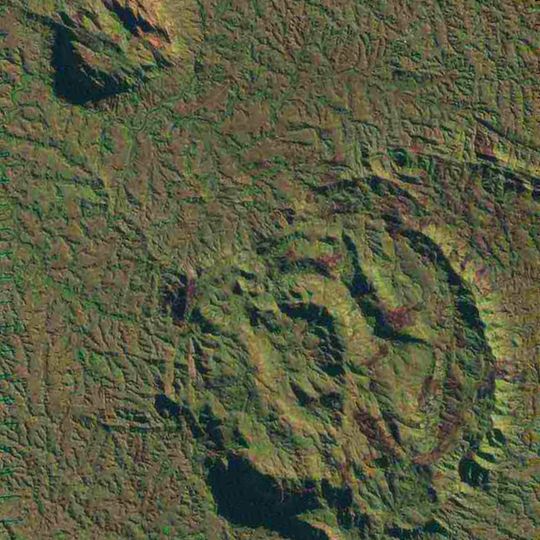
Ambohiby Massif, Volcanic massif in Bongolava region, Madagascar.
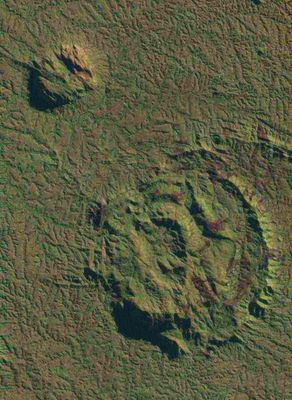
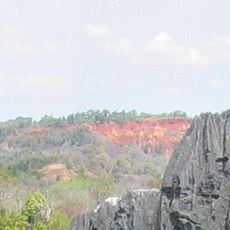
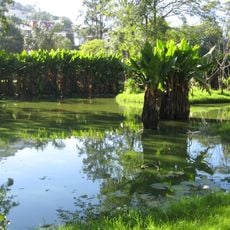
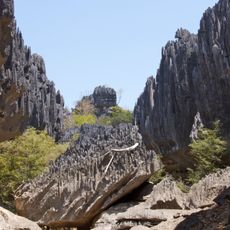
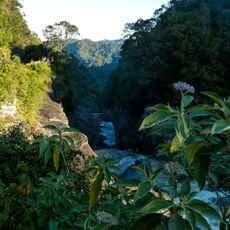
The Ambohiby Massif stretches 225 kilometers (140 miles) across the highlands of Madagascar, with two prominent peaks rising above dense vegetation. The slopes are covered in thick forest, while the interior forms a ring structure with several natural water sources.
The massif formed during the Late Cretaceous period, roughly 90 million years ago, when Madagascar and India separated and volcanic activity shaped the region. The subsequent collapse of volcanic structures created the present ring landscape with its two remaining peaks.
The indigenous population named the crater Andranomangatsiaka, meaning where we find sweet water, referring to the natural springs in the area. This name is still used by people who live and work in the surrounding region, showing their close relationship with the landscape.
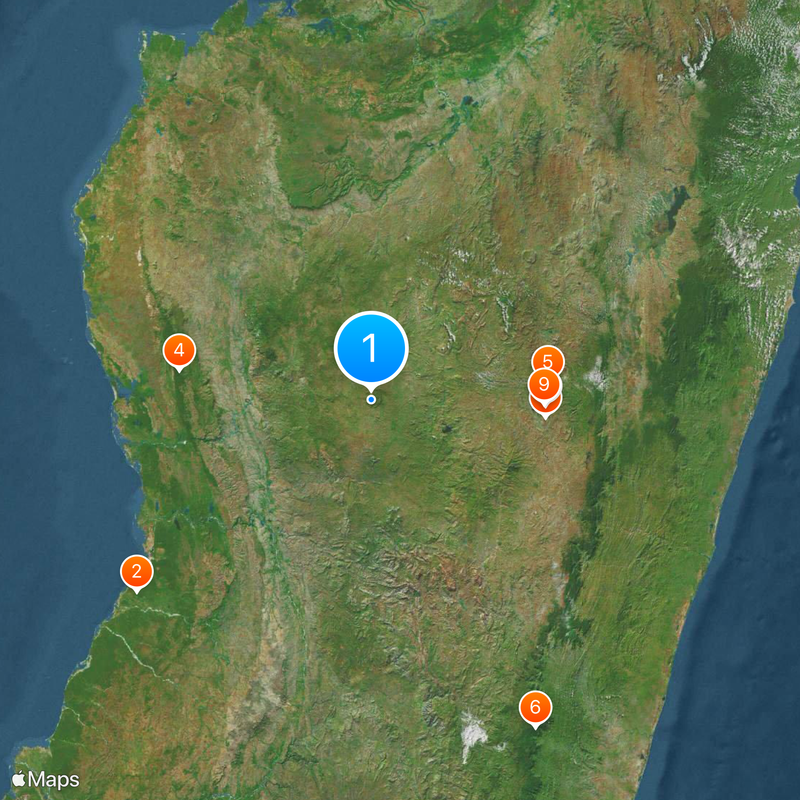
Access is through the nearby town of Tsiroanomandidy, located about 18 kilometers (11 miles) away, which serves as a base for exploration. Local guides can be arranged on site and help with orientation through the dense forest and rugged sections.
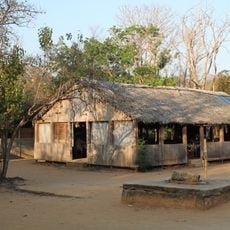
Inside the ring structure lives a small community of about 300 Betsileo people in relative isolation, separated from other settlements by natural barriers. This community has developed its own rhythm of daily life, using the water sources and agricultural land within the crater.
The community of curious travelers
AroundUs brings together thousands of curated places, local tips, and hidden gems, enriched daily by 90,851 contributors worldwide.