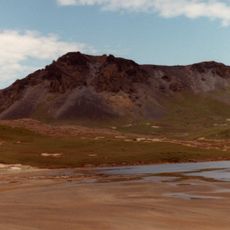
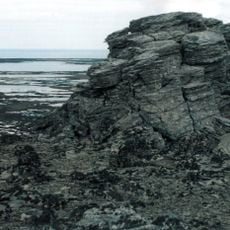
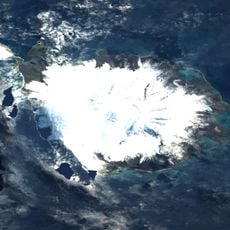
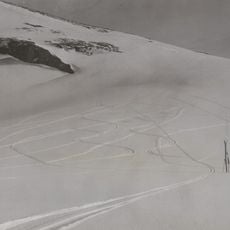
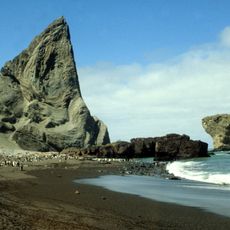
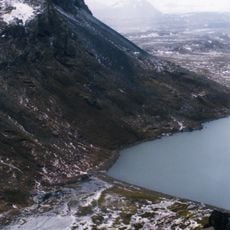
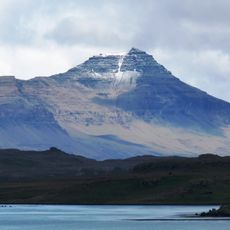
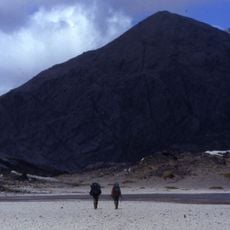
Mont Ross, Stratovolcano in Kerguelen Islands, France.
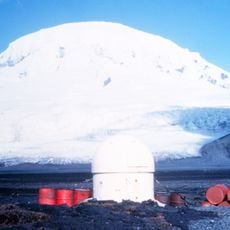
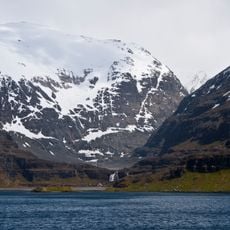
Mont Ross is a stratovolcano on the Kerguelen Islands and at roughly 1,850 meters (6,070 feet) stands as the highest peak of the Gallieni Massif on Grande Terre. The mountain is composed of volcanic rock and rises in this remote region of the southern Indian Ocean.
Mont Ross was named by the HMS Challenger expedition in 1874 after polar explorer James Clark Ross, who had visited the archipelago in 1840. Its volcanic rocks date from 2 million to 100,000 years ago. The first ascent was made on 5 January 1975 by Jean Afanassieff and Patrick Cordier, the last French mountain to be climbed.
The name was given by the 1874 HMS Challenger expedition in honour of polar explorer James Clark Ross, who had visited the archipelago in 1840. Nineteenth-century sealers knew the massif as Forked Mount and Snowy Peak, and the twin summits are still called Grand Ross and Petit Ross.
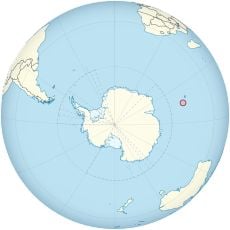
The extreme southern location at roughly 49.6 degrees south latitude and 69.5 degrees east longitude makes this peak extremely difficult to reach. Visits are only feasible during the brief southern summer months, and climbing gear must be carefully prepared for harsh conditions.
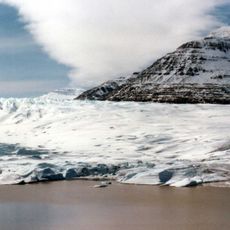
Mont Ross has two summits: Grand Ross at 1,850 metres and Petit Ross at 1,721 metres, forming the western rim of a horseshoe-shaped caldera open to the east. The Buffon glacier rises inside this caldera, where the pic du Cratère and piton Central also stand. In 1929 Edgar Aubert de la Rüe reached the crater but not the summit.
The community of curious travelers
AroundUs brings together thousands of curated places, local tips, and hidden gems, enriched daily by 93,127 contributors worldwide.