Mount Conner, Mesa in the Northern Territory, Australia
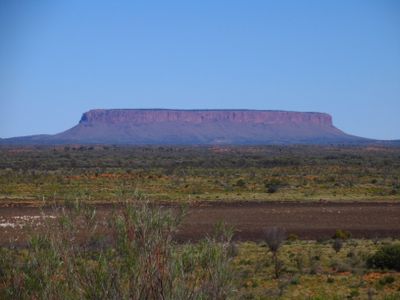
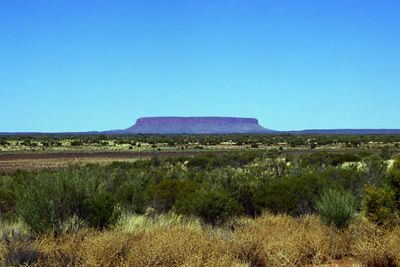
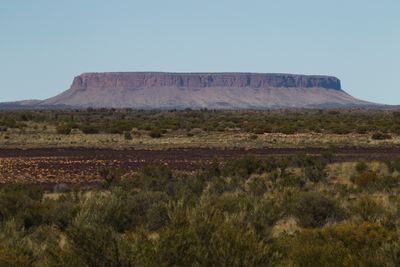
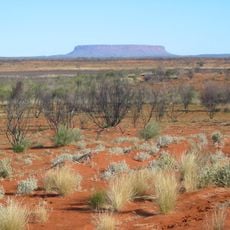
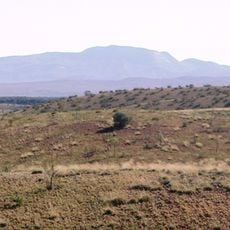
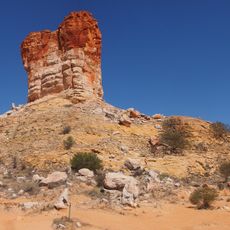
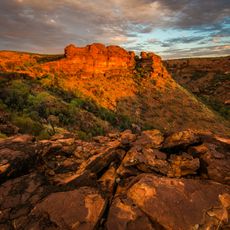
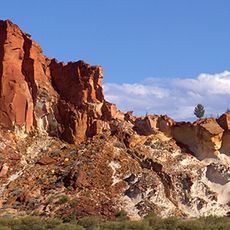
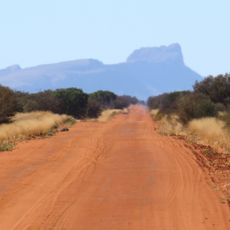
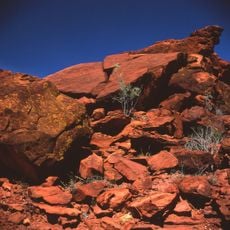
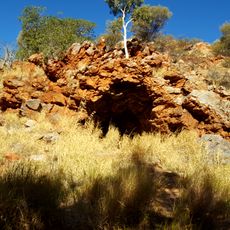
Mount Conner is a flat-topped, kidney-shaped mesa of reddish-purple rock rising 300 metres above the surrounding plain, about 2,800 metres long and up to 1,300 metres wide. Its upper face is a sheer cliff band above slopes of scree and talus, with the summit covered by colluvium and the base ringed by alluvium. It is an inselberg, an erosional remnant of a Cretaceous land surface, with no direct link to the sandstone of Uluru.
William Gosse named Mount Conner in 1873 after M. L. Conner, a South Australian politician who supported many of the first settlers in Australia. The name is often misspelled as Mount Connor. In 1936, former schoolteacher Ellis Bankin mistook the mountain for Uluru while travelling to the latter; he died of exhaustion and was buried near Mount Conner.
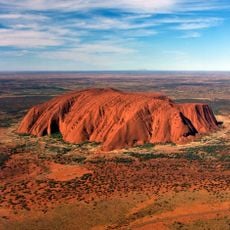
The Anangu of Pitjantjatjara country call the mesa Artilla or Atila, a name tied to the "terrible ice-man" story. It stands near the Kungkarangkalpa (Seven Sisters) Dreaming site. Tourists often confuse it with Uluru, so locals joke that it is "Fooluru".
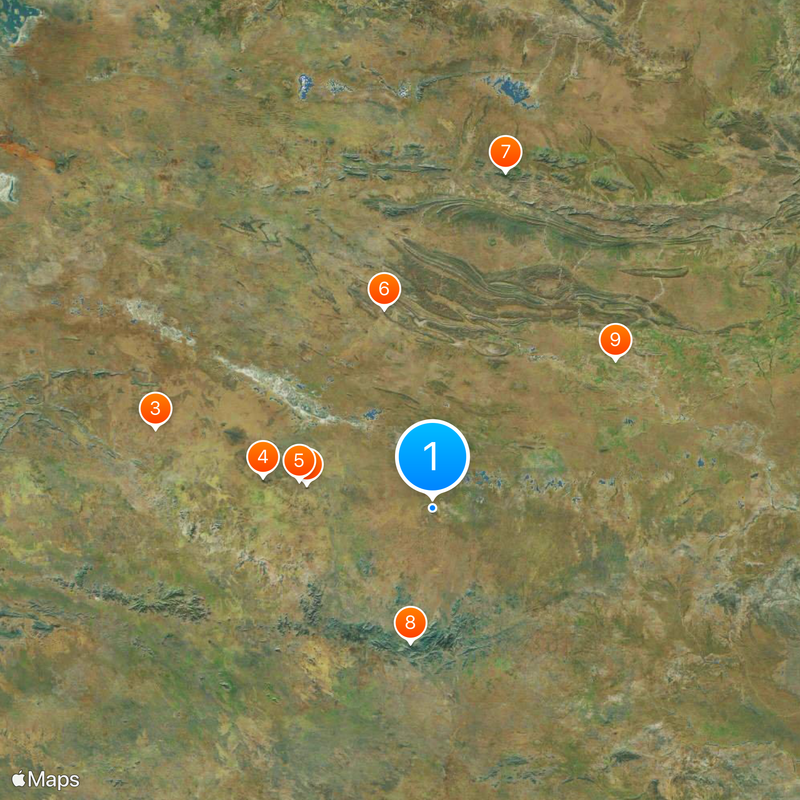
Visitors reach Mount Conner via the Lasseter Highway, located about 75 kilometers southeast of Lake Amadeus within the Curtin Springs cattle station. Access is through private pastoral land, so checking conditions beforehand is recommended.
Mount Conner is often mistaken for Uluru from the Lasseter Highway. Former schoolteacher Ellis Bankin made that error in 1936 while travelling to Uluru; he died of exhaustion and was buried near Mount Conner, which locals nicknamed Fooluru or Fuluru after such mix-ups.
The community of curious travelers
AroundUs brings together thousands of curated places, local tips, and hidden gems, enriched daily by 93,226 contributors worldwide.