Kata Tjuta, Rock formation complex in Northern Territory, Australia.
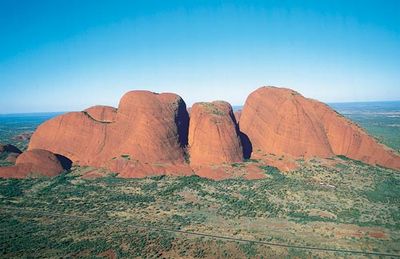
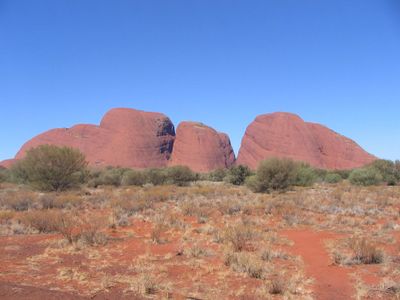
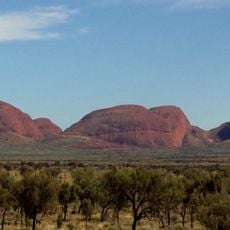
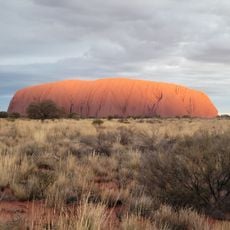
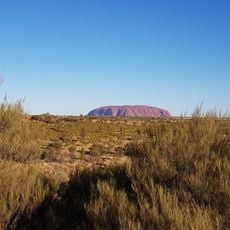
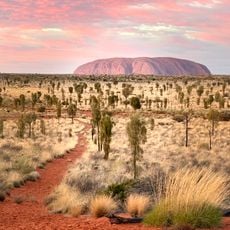
Kata Tjuṯa is a group of 36 domed conglomerate rock formations in Uluṟu-Kata Tjuṯa National Park, Northern Territory. The domes rise from a flat plain, with Mount Olga reaching 1,066 m above sea level, about 546 m above the surrounding plain. The rock is conglomerate, made of granite and basalt cobbles cemented by coarse sandstone, and its orange-red surface comes from an iron oxide patina.
The formations were mapped during 19th-century European exploration of Australia and received an alternative English designation at that time. In the later decades of the 20th century, management of the area was progressively returned to the traditional owners.
Kata Tjuṯa means 'many heads' in Pitjantjatjara, from kata (head) and tjuṯa (many). The Anangu, the traditional owners, use the site for rituals tied to the Dreaming, and since 1995 it has again hosted cultural ceremonies. Most mythology about the domes is not disclosed to outsiders, and women in particular are excluded from men's business.
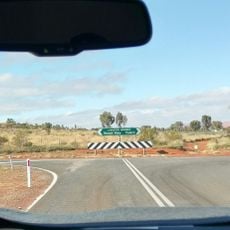
Access to the area is by road from the main route through central Outback. Two walking trails lead through the valleys and along the gorges between the rock formations, with the longer path taking several hours to complete.
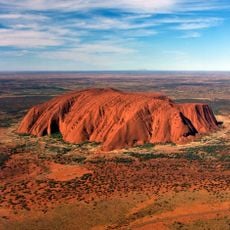
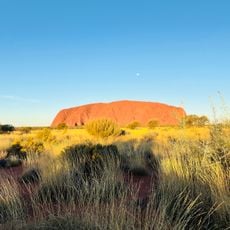
The highest peak in this group stands about 200 meters (656 feet) taller than nearby Uluru, though that landmark usually receives more attention. The rock itself consists of a conglomerate material, which differs from the smoother surface of other formations in the region.
The community of curious travelers
AroundUs brings together thousands of curated places, local tips, and hidden gems, enriched daily by 92,776 contributors worldwide.