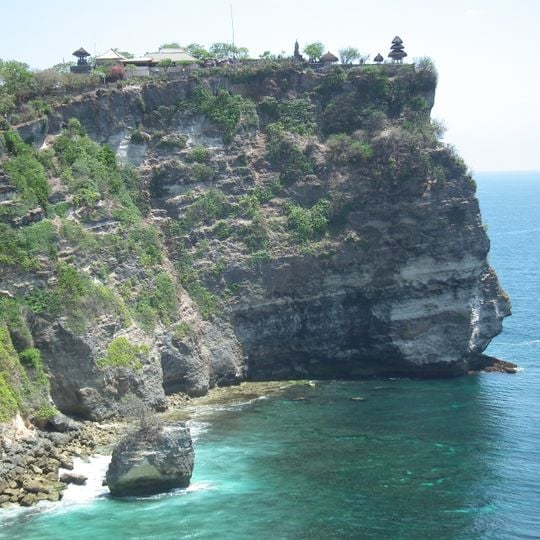
Pura Luhur, Hindu sea temple in South Kuta, Indonesia
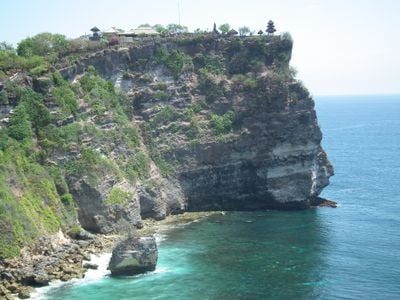
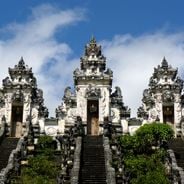
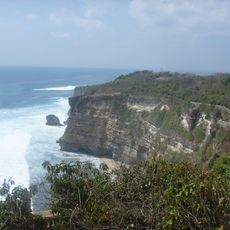
Pura Luhur Uluwatu stands on a steep cliff top at the southwestern tip of the Bukit Peninsula in Pecatu Village, South Kuta. Small shrines with dark tiered roofs and pale walls sit along the summit, with a taller multi-tiered shrine and a slender spire toward the right. A weathered grey stone gate with a stepped tower and an arched opening stands before a single tall tree, and a carved figure sits in a niche on its facade.
A small temple is said to have existed earlier, but the structure was significantly expanded in the 11th century by the Javanese sage Empu Kuturan, who taught the rules of the customary village (desa adat). At the turn of the 16th century, Dang Hyang Nirartha introduced the padmasana shrines and is said to have attained moksha here, an event called ngeluhur that gave the temple its epithet Luhur.
The complex takes its name from Old Javanese luhur, meaning elevated or sacred place, which refers to its position above the sea. The sanctuary follows the traditional tripartite layout of Balinese temples, with an outer zone for ceremonies, a middle section for worshippers, and an inner courtyard reserved for consecrated priests.
Visitors should wear a sarong and sash, both available for rent at the entrance, to comply with religious customs. The complex is open daily from 9 AM to 6 PM, and most guests arrive in the late afternoon to watch the sunset over the ocean.
Long-tailed macaques live on the temple grounds and have learned to take objects from visitors in order to trade them for food. These monkeys have developed a system where they return stolen sunglasses or hats only in exchange for specific treats.
The community of curious travelers
AroundUs brings together thousands of curated places, local tips, and hidden gems, enriched daily by 92,668 contributors worldwide.