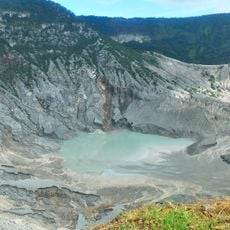
Mount Sunda, Prehistoric stratovolcano in Priangan Highlands, Indonesia
Mount Sunda is a prehistoric stratovolcano in the Priangan Highlands of West Java, with remains still visible in today's landscape. The area features three distinct volcanic formations that shape the terrain: Tangkuban Perahu, Burangrang, and Bukit Tunggul.
The volcano experienced two major eruptions during the Pleistocene age, with the final event occurring around 55,000 years ago and blocking the Citarum River. These eruptions fundamentally altered the geology and water systems of the entire region.
The name comes from the Sanskrit word "Chuda", meaning white, referring to snow-covered peaks that early travelers observed. The mountain shaped how people understood and experienced this region for generations.
The mountain's remains are spread across the landscape and can be explored from different vantage points. Visitors should wear sturdy footwear and be prepared for changing weather conditions in the higher elevations.
During the Pleistocene, this mountain may have reached heights between 3,000 and 4,000 meters (9,800 and 13,000 feet), making it one of Java's tallest peaks at that time. Today only the lower sections remain, hinting at its former grandeur.
The community of curious travelers
AroundUs brings together thousands of curated places, local tips, and hidden gems, enriched daily by 91,215 contributors worldwide.