Pasupati Bridge, Cable-stayed bridge in Bandung, Indonesia.
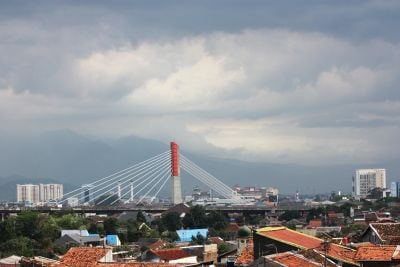
Pasupati Bridge is a cable-stayed structure spanning the Cikapundung valley, connecting the northern and eastern sections of Bandung. The bridge features steel cables supported by pylons, creating a modern transportation link across the valley.
The overpass was planned as early as the 1920s by architect Thomas Karsten, who envisioned a link between Pasteurweg and Dagoweg. The current structure was funded by a grant from Kuwait, and after years of delays, initial trials took place on 26 June 2005. On 1 March 2022, Governor Ridwan Kamil renamed it Jembatan Layang Prof. Dr. Mochtar Kusumaatmadja.
The name comes from two street names, Pasteur and Surapati, replacing the former local term for elevated highways. It has become a familiar landmark in daily life for people traveling across the valley.
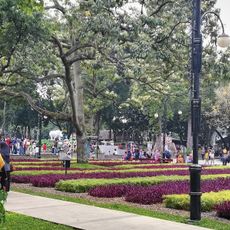
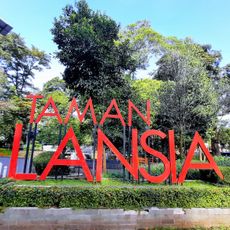
The 161-metre cable-stayed span crosses the Cikapundung valley with no intermediate supports, so the deck offers an uninterrupted run between Jalan Pasteur and Jalan Surapati. Pasupati Park sits beneath the deck, and the central section is lit with coloured spotlights after dark. The structure is a road overpass, not a pedestrian bridge.
The 161-metre cable-stayed span over the Cikapundung valley has no piers beneath it; its deck hangs from 19 steel cables, 10 on the west side and 9 on the east, each bundle made of 91 smaller cables that each contain seven strands. The ten western cables are installed in pairs.
The community of curious travelers
AroundUs brings together thousands of curated places, local tips, and hidden gems, enriched daily by 94,671 contributors worldwide.