Fort Willem I, 19th century Dutch fortress in Ambarawa, Indonesia
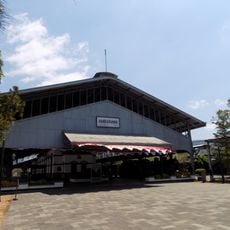
Fort Willem I is a pentagonal fortress in Ambarawa designed as a strategic military outpost, with a distinctive five-sided layout and symmetrical buildings arranged at cardinal points. The structure houses barracks, storage facilities, and a connection to the railway system that once linked it to major cities.
During the Diponegoro War (1827-1830), Colonel Hoorn had bamboo sheds and military barracks built at nearby Bawen, a junction linking Semarang, Yogyakarta, Salatiga and Surakarta. The fort itself was constructed in Ambarawa between 1834 and 1853, during the reign of Willem II. From 1853 to 1927 it housed KNIL barracks; in 1927 it became an adult and political prison, and under Japanese occupation an internment camp. From 14 October to 23 November 1945, Indonesian forces held about 3,500 Dutch civilians inside it.
The fort served as a Dutch military post and later as an internment camp, then as a base for Indonesian forces, with each role leaving marks on how visitors experience the spaces today. The building reflects these layered uses in its layout and the stories embedded in its different areas.
The site is accessible on foot and visitors can explore the different areas fairly easily without special equipment, though sturdy shoes are helpful for walking the grounds. It is best to arrive early in the day to avoid the heat and experience the spaces when they are less crowded.
The fort has no embrasures or bastions; its bastions stand detached from the main work, and the ramparts are pierced by many windows rather than gun ports. Small storage buildings lie about 94 metres from the fort at each cardinal point. The main building is a pentagon roughly 178 m by 178 m, set in the middle of a rice field.
The community of curious travelers
AroundUs brings together thousands of curated places, local tips, and hidden gems, enriched daily by 93,195 contributors worldwide.